 Cart is empty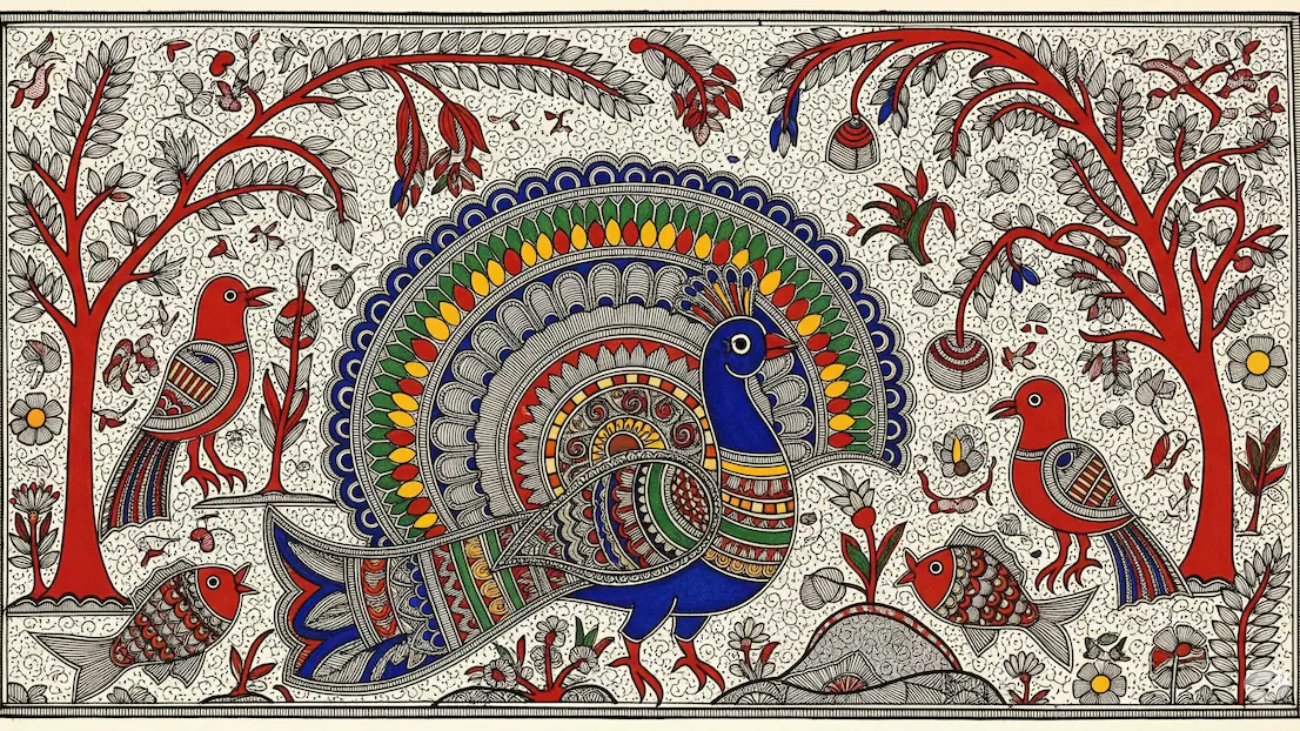
Introduction: More Than Just Beautiful Patterns
When people first see Madhubani art, they are often attracted by its vibrant patterns, flowing lines, and beautiful storytelling. At first glance, it may seem like a decorative folk art full of colors and detailed shapes. But when we pause and truly observe, we begin to notice something much deeper — every line, every motif, and every figure carries meaning.
Madhubani art is not simply created to fill empty spaces. Traditionally, it was painted to invite blessings, express devotion, celebrate life, and preserve spiritual wisdom passed from one generation to another. Hidden inside its intricate beauty are symbols that represent love, protection, prosperity, balance, devotion, fertility, nature, and divine energy.
For centuries, families in villages of Bihar used these sacred symbols to decorate walls during festivals, weddings, religious ceremonies, and important moments of life. The paintings were considered spiritually meaningful and emotionally powerful, reminding people of the sacred connection between humanity, nature, and divinity.
Today, in a world filled with stress, speed, and digital distraction, these ancient symbols still speak to us. They remind us to slow down, reconnect, and rediscover spiritual meaning in everyday life.
But what do these symbols truly mean?
Let us step into the sacred language of Madhubani art and uncover the hidden stories within its beautiful patterns.
The Sun: Symbol of Life, Energy, and Divine Protection
One of the most commonly seen symbols in Madhubani art is the Sun. It appears bold, radiant, and powerful, often surrounded by decorative patterns that emphasize its importance.
In Indian tradition, the Sun represents energy, life force, discipline, truth, and divine power. Without sunlight, life itself cannot exist. Farmers pray for it, devotees honor it, and artists celebrate it.
In Madhubani paintings, the Sun often symbolizes positivity, strength, growth, and spiritual awakening. Many families believed painting the Sun invited blessings, protection, and abundance into the home.
Even today, seeing the image of a radiant Sun in traditional art can create feelings of warmth, hope, and optimism.
The Fish: A Symbol of Prosperity and Good Fortune
Fish are another important symbol frequently painted in Madhubani art.
At first, many people simply admire their decorative beauty without understanding their deeper meaning. In traditional symbolism, fish represent fertility, prosperity, abundance, movement, and good luck.
Because fish multiply quickly and move freely through water, they became associated with growth and positive flow in life. Water itself symbolizes life and emotional balance, making fish a sacred sign of continuity and nourishment.
In spiritual interpretation, fish also remind us to adapt to life’s changes while continuing to move forward peacefully.
This is one reason why Madhubani artists often include fish in wedding art and celebratory paintings.
The Lotus: Purity Amid Life’s Challenges
Perhaps one of the most spiritually powerful symbols in Madhubani art is the lotus flower.
The lotus grows from muddy water yet blooms untouched by dirt — pure, calm, and beautiful. This symbolism carries an important life lesson.
In spiritual philosophy, the lotus teaches us that even in difficult circumstances, we can rise, grow, and remain peaceful from within.
The lotus is also deeply associated with divine energy and appears alongside many Hindu deities. It represents purity, inner awakening, peace, wisdom, and spiritual beauty.
In Madhubani paintings, lotus motifs are often used to create sacred harmony and devotional atmosphere.
When people display lotus-inspired artwork in their homes, it often creates a feeling of calmness and spiritual grounding.
Why These Symbols Still Matter Today
Modern life moves quickly. We spend hours surrounded by screens, deadlines, noise, and pressure.
Yet ancient art forms like Madhubani quietly remind us of something important — life is not only about productivity; it is also about meaning, beauty, balance, and connection.
The symbols painted hundreds of years ago still feel relevant because human emotions remain the same. We still seek peace. We still hope for prosperity. We still long for protection, happiness, and spiritual purpose.
Perhaps this is why Madhubani art continues to touch hearts across generations.
When you bring a Madhubani artwork into your home, you are not simply decorating a wall.
You are inviting a story, a blessing, and a timeless piece of cultural wisdom into your living space.
Final Thoughts
Madhubani art speaks a silent spiritual language.
The Sun reminds us of strength and hope.
The fish teaches abundance and flow.
The lotus inspires inner purity and growth.
And hidden inside every line is a reminder that beauty becomes even more meaningful when it carries wisdom.
The next time you look at a Madhubani painting, pause for a moment and ask yourself:
What story is this artwork trying to tell me?
Why Madhubani Art Is Becoming Popular Around the World
Introduction: From Village Walls to Global Homes
For centuries, Madhubani art lived quietly in the villages of Bihar, India.
Women painted sacred stories, nature, symbols, and divine figures on mud walls during weddings, festivals, and spiritual ceremonies. These paintings were not created for galleries, exhibitions, or commercial success. They were expressions of devotion, storytelling, celebration, and cultural identity.
No one could have imagined that an art form born inside village homes would one day travel across continents and find admiration in homes, galleries, cafés, offices, spiritual spaces, and art collections around the world.
Yet today, Madhubani art is loved by people in countries far beyond India.
From the United States to Europe, Australia to Japan, people are increasingly decorating their homes with Madhubani-inspired paintings, handmade artworks, textiles, and spiritual décor.
But why?
What makes this centuries-old folk art suddenly so meaningful to people living in modern cities thousands of miles away?
The answer lies deeper than beauty alone.
Madhubani art is becoming globally loved because it offers something many people are searching for — meaning, authenticity, culture, spirituality, handmade beauty, and emotional connection.
Let us understand why this ancient Indian art form is touching hearts worldwide.
A World Tired of Mass Production Is Rediscovering Handmade Beauty
Modern life is filled with factory-made products.
Furniture, décor, fashion, gifts, and wall art are often mass-produced in huge quantities. Many homes begin to look similar, filled with objects that are beautiful but emotionally disconnected.
As people grow tired of identical products, something interesting is happening.
Many are returning to handmade, meaningful creations.
People increasingly want items that feel personal, artistic, and human.
Madhubani art answers this desire beautifully.
Its handmade lines, storytelling details, symbolic patterns, and imperfect beauty make every piece feel alive.
Unlike machine-made décor, Madhubani paintings carry personality.
You can often feel the artist’s hand, patience, imagination, and devotion inside the artwork itself.
This emotional warmth makes handmade Indian folk art feel deeply special to buyers around the world.
People Are Searching for Spiritual Calm in a Busy World
Modern society moves quickly.
Phones constantly ring. Social media never stops. Work schedules become stressful. Minds remain busy.
As stress increases, people begin searching for calmness and emotional grounding.
This is one reason spiritual art is becoming more popular worldwide.
Madhubani art often includes sacred stories, lotus flowers, divine figures, fish, trees, celestial symbols, peacocks, Radha-Krishna imagery, and nature-inspired harmony.
Even for people who may not fully understand Indian spiritual traditions, these artworks often create feelings of peace, beauty, warmth, and emotional comfort.
Many buyers describe spiritual folk art as calming.
Some place it in meditation rooms, yoga studios, prayer spaces, living rooms, bedrooms, or creative workspaces because the artwork brings emotional softness to modern environments.
In many ways, Madhubani art offers something people deeply miss today — stillness.
The Beauty of Storytelling Through Art
One of the strongest reasons Madhubani art attracts global audiences is storytelling.
Many forms of modern décor are visually attractive but emotionally empty.
Madhubani feels different.
Every artwork tells a story.
Sometimes it tells stories of love through Radha and Krishna.
Sometimes it celebrates marriage traditions, festivals, seasons, village life, fertility, devotion, or harmony with nature.
Sometimes animals, flowers, birds, and sacred symbols communicate hidden meanings.
This storytelling makes people curious.
Instead of simply hanging art on a wall, people feel they are inviting culture and meaning into their homes.
When guests visit, conversations naturally begin:
“What does this symbol mean?”
“Who are these figures?”
“What story is this artwork telling?”
Art becomes a bridge between cultures.
Sustainability and Slow Living Are Influencing Buyers
Across the world, many people are embracing slower and more meaningful lifestyles.
There is growing interest in handmade products, ethical shopping, traditional crafts, sustainability, and supporting artists rather than factories.
Madhubani art fits beautifully into this movement.
Traditional folk art feels connected to human hands, patience, and craftsmanship.
People increasingly value the time, care, and artistic tradition behind handmade work.
Owning such art feels different from buying something mass-produced online.
It feels intentional.
For many buyers, purchasing handmade folk art becomes a way of preserving culture while also supporting independent artists and traditional craftsmanship.
Social Media and Global Awareness Have Helped Indian Folk Art Grow
Another reason Madhubani art is becoming internationally popular is visibility.
Today, platforms like Instagram, Pinterest, Etsy, and art marketplaces allow artists to share their work globally.
Someone sitting in Texas, London, Tokyo, or Paris can instantly discover a Madhubani painting from India.
People who may never have visited India suddenly become fascinated by its culture, mythology, spirituality, and artistic traditions.
Videos showing handmade painting processes, detailed brushwork, symbolic storytelling, and colorful compositions inspire admiration worldwide.
Global appreciation has grown because cultural beauty is now easier to discover than ever before.
Madhubani Art Feels Timeless
Trends come and go.
Interior styles change.
Fashion evolves.
But certain forms of beauty remain timeless.
Madhubani art carries something ancient yet modern.
It can feel traditional inside a spiritual home, elegant in minimalist spaces, meaningful inside modern apartments, and culturally rich inside artistic interiors.
Its patterns, storytelling, symmetry, symbolism, and emotional warmth make it adaptable across generations and cultures.
Perhaps this timeless quality explains why people continue falling in love with it.
Final Thoughts: Why the World Is Falling in Love with Madhubani Art
Madhubani art is becoming globally admired because it gives people something rare.
It is beautiful, but also meaningful.
Decorative, yet spiritual.
Ancient, yet surprisingly modern.
Handmade, yet timeless.
In a world filled with speed, noise, and mass production, Madhubani quietly offers stillness, storytelling, culture, and emotional connection.
Perhaps this is why a traditional art form once painted on village walls in Bihar now finds a place inside homes around the world.
Because true beauty never loses its power when it carries soul.
The next time you see a Madhubani painting, ask yourself:
Am I only looking at art — or am I looking at centuries of wisdom painted by hand?
Final Conclusion: Madhubani Art as a Living Spiritual Heritage
Madhubani art is not only an art form. It is a living spiritual heritage.
From village walls in Bihar to modern homes around the world, Madhubani has carried stories of devotion, nature, womanhood, celebration, protection, love, and divine blessings. Every pattern, every symbol, every border, and every sacred figure holds meaning.
What makes Madhubani truly special is that it connects beauty with purpose.
It does not exist only to decorate a wall. It exists to tell a story. It teaches us about harmony with nature, respect for tradition, devotion to the divine, and the quiet strength of handmade creativity.
In today’s world, where life often feels fast, digital, and disconnected, Madhubani art brings us back to something pure. It reminds us that art can be prayer. Art can be memory. Art can be culture. Art can be healing.
The Sun brings energy and hope.
The lotus teaches purity and spiritual growth.
The fish symbolizes prosperity and flow.
The peacock represents beauty and grace.
The tree of life reminds us of connection, roots, and continuity.
And the sacred stories of gods and goddesses remind us that divine wisdom can be expressed not only through words, but also through color, line, and imagination.
When someone brings Madhubani art into their home, they are not simply choosing a painting. They are welcoming centuries of Indian tradition, feminine creativity, spiritual symbolism, and cultural storytelling.
This is why Madhubani art continues to remain powerful across generations.
It belongs to the past, but it still speaks to the present.
It comes from tradition, but it continues to inspire modern hearts.
It is handmade, but it carries timeless wisdom.
At Wispering Pines Studio, we honor Madhubani art not just as decoration, but as a sacred visual language — a language of devotion, culture, nature, and soul.
May every Madhubani-inspired artwork bring warmth, meaning, beauty, and blessings into the space where it lives.