 Cart is empty
 Introduction — Why Madhubani Art Still Touches Hearts Across Generations
Some forms of art simply decorate a wall, while others tell stories, awaken emotions, and quietly bring warmth into a home. Madhubani art belongs to the second kind.
For centuries, this beautiful Indian folk art has been admired not only for its vibrant patterns and striking details but also for the deep spiritual and cultural meaning hidden within every line, flower, symbol, and color. Whether it is a graceful peacock, a blooming lotus, divine figures such as Radha-Krishna, or sacred nature motifs, Madhubani art speaks a visual language of devotion, harmony, love, prosperity, and connection to life.
Today, in a fast-moving world filled with modern distractions, many people are rediscovering traditional art forms because they seek something deeper—beauty with meaning, decoration with emotion, and surroundings that create calmness and peace. This is one of the reasons Madhubani art continues to captivate both older generations and younger audiences alike.
For some, Madhubani art reminds them of Indian traditions, spirituality, and heritage. For others, it becomes a beautiful way to bring storytelling, positive energy, and cultural richness into modern homes.
But what makes Madhubani art so special?
Why has it survived for centuries and continues to inspire artists, collectors, homeowners, and spiritual seekers around the world?
To truly appreciate its beauty, we must first understand its history, symbolism, and spiritual roots.
What Is Madhubani Art?
Madhubani art, also known as Mithila art, is one of India’s oldest and most celebrated traditional folk art styles. It originated in the Mithila region of Bihar, India, and has been practiced for generations, especially by women who painted sacred walls and floors of homes during religious ceremonies, festivals, weddings, and celebrations.
The word “Madhubani” literally means “forest of honey,” a poetic name that beautifully reflects the richness, storytelling, and natural inspiration often found in this art form.
Traditionally, Madhubani paintings were created using natural colors made from flowers, turmeric, leaves, soot, rice paste, sandalwood, and minerals. Artists used handmade tools such as twigs, fingers, matchsticks, cloth, and bamboo pens to create detailed patterns.
One of the most recognizable features of Madhubani art is its distinctive visual style.
You will often notice:
Intricate Patterns and Borders
Almost every space in a Madhubani painting is filled with detailed lines, floral work, textures, geometric designs, or repeating motifs. Empty spaces are rarely left untouched because fullness is often associated with prosperity, abundance, and harmony.
Bold Symbolic Imagery
Rather than painting random subjects, Madhubani artists often create meaningful symbols representing spirituality, relationships, nature, divine blessings, fertility, love, balance, and prosperity.
Nature and Divine Connection
Trees, birds, fish, peacocks, lotus flowers, the sun, moon, rivers, and sacred animals are common elements because Madhubani art reflects humanity’s deep connection with nature and the divine.
Sacred Storytelling
Many Madhubani artworks depict scenes from Indian epics and mythology including stories of Radha-Krishna, Rama-Sita, Shiva-Parvati, Goddess Durga, Lakshmi, and village traditions. Through visual storytelling, spiritual lessons and cultural wisdom are passed from generation to generation.
Even today, although Madhubani art has evolved into wall paintings, home decor, digital artwork, canvas paintings, and contemporary designs, its heart remains deeply rooted in storytelling, spirituality, and tradition.
The Origin and History of Madhubani Art
To understand the soul of Madhubani art, we must travel back centuries into the Mithila region of Bihar.
According to popular tradition and folklore, Madhubani art dates back to the time of the Ramayana.
It is believed that when King Janaka arranged the wedding of his daughter Sita to Lord Rama, he instructed artists and women in the kingdom to decorate palace walls and homes with beautiful paintings to celebrate the divine marriage.
Whether understood as history, mythology, or cultural memory, this story beautifully reflects one important truth:
Madhubani art has always been connected to sacred celebration, devotion, storytelling, and spiritual symbolism.
For generations, women of the Mithila region painted walls, courtyards, prayer rooms, and floors during auspicious events such as:
- Weddings
- Festivals
- Birth ceremonies
- Religious rituals
- Seasonal celebrations
These paintings were never viewed as simple decoration.
They carried meaning.
Each pattern, symbol, deity, and color often reflected prayers for happiness, harmony, prosperity, fertility, family blessings, protection, and spiritual balance.
In many traditional homes, creating Madhubani art was itself considered an act of devotion.
Mothers taught daughters.
Stories were passed through paintings.
Culture lived through art.
Over time, what began on mud walls slowly moved to handmade paper, cloth, and canvas, eventually reaching galleries, homes, collectors, and art lovers around the world.
Yet despite modernization, the spirit of Madhubani art still remains beautifully alive.
It continues to carry a timeless message:
Art can preserve memory, devotion, beauty, and cultural identity.
The Spiritual Meaning of Madhubani Art
One of the most beautiful reasons people feel emotionally drawn toward Madhubani art is because it often carries a spiritual presence.
Even people who do not fully understand its history frequently describe a feeling of warmth, peace, beauty, and emotional comfort when looking at it.
Why?
Because Madhubani art was never created merely to decorate walls.
It was created with intention.
In traditional Indian households, art and spirituality were deeply connected. Sacred paintings represented prayers, gratitude, harmony, and the celebration of life itself.
Many Madhubani paintings symbolically express ideas such as:
Harmony Between Human Life and Nature
Animals, trees, rivers, birds, and flowers often appear together, reminding us that human beings are deeply connected with nature and creation.
Divine Love and Devotion
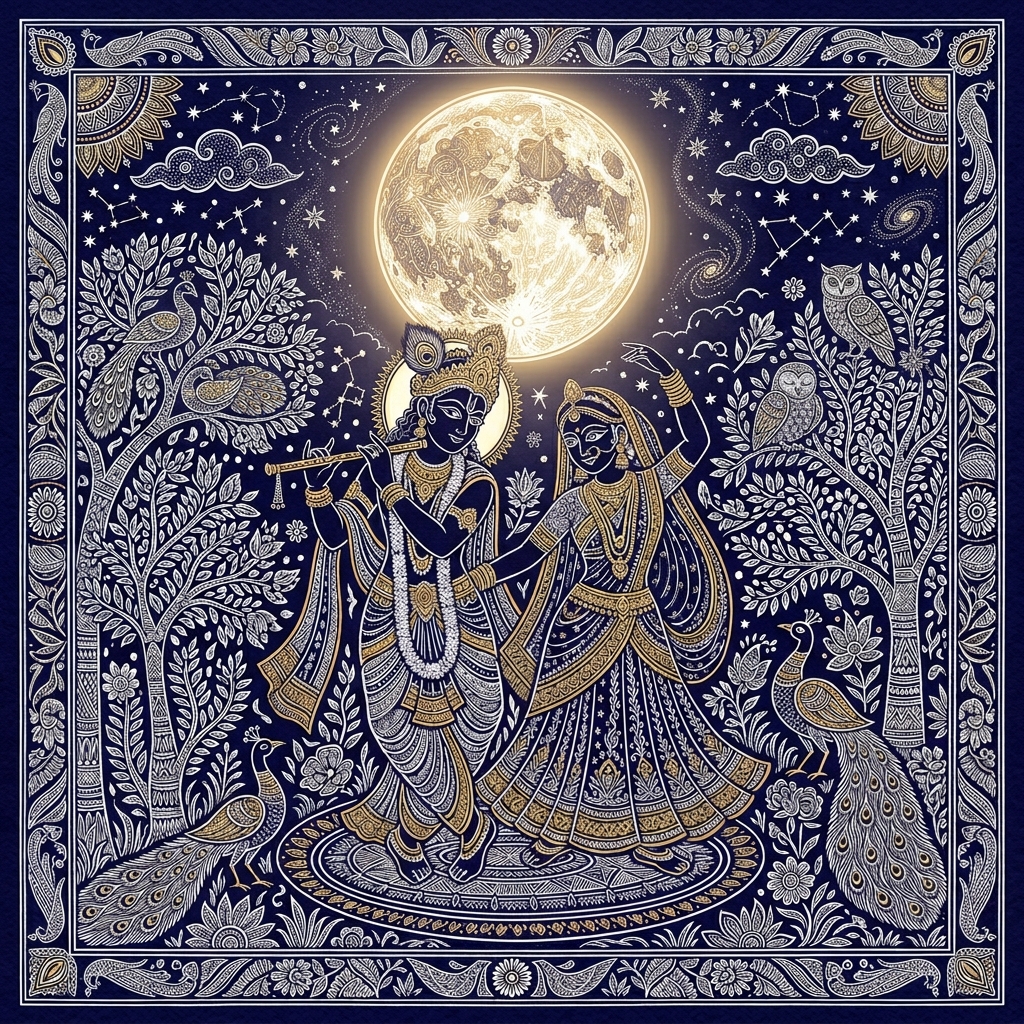
Scenes of Radha-Krishna, Shiva-Parvati, Lakshmi, Durga, or Rama-Sita symbolize love, faith, protection, abundance, balance, and spiritual connection.
Positive Energy and Prosperity
Traditional motifs such as lotus flowers, fish, circular patterns, suns, and sacred symbols are often believed to represent growth, abundance, renewal, and positivity.
Celebration of Life
Unlike minimalist modern art, Madhubani art celebrates fullness, emotion, rhythm, storytelling, and the richness of existence.
For many people today, adding Madhubani art to a home is not simply about decoration.
It becomes a way of bringing culture, beauty, peace, symbolism, and emotional warmth into everyday spaces.
Symbolism in Madhubani Art — The Sacred Meaning Hidden Within Every Motif
One of the most fascinating aspects of Madhubani art is that every symbol often carries meaning. Unlike decorative designs that exist only for beauty, Madhubani paintings traditionally communicate stories, emotions, blessings, devotion, and cultural beliefs.
To truly appreciate Madhubani art, one must learn to “read” its visual language.
Behind every flower, bird, deity, tree, and geometric form lies symbolism that connects spirituality, nature, and human life.
Let us explore some of the most beloved symbols found in Madhubani paintings and what they traditionally represent.
The Lotus — Purity, Spiritual Awakening, and Divine Beauty
The lotus is among the most sacred and meaningful symbols in Indian spiritual traditions and appears frequently in Madhubani art.
A lotus grows from muddy waters yet blooms beautifully untouched by impurity. Because of this, it often symbolizes:
- Spiritual awakening
- Purity of mind and heart
- Beauty emerging through struggle
- Inner peace and divine energy
- Prosperity and sacred blessings
In Hindu tradition, Goddess Lakshmi and Lord Brahma are often associated with lotus flowers, strengthening its spiritual significance.
In home decor, lotus-inspired Madhubani artwork can create a feeling of peace, calmness, and spiritual elegance.
For many people, the lotus becomes a gentle reminder that beauty and strength can emerge even during difficult times.
Fish — Prosperity, Fertility, Good Fortune, and Flow of Life
Fish are one of the most recognizable motifs in Madhubani art.
At first glance, they may seem decorative, but traditionally they carry deep symbolic meaning.
Fish are often associated with:
- Prosperity
- Fertility and abundance
- Good fortune
- Movement and flow of life
- Adaptability and continuity
Because fish move gracefully through water, they symbolize flexibility, resilience, and life’s natural rhythm.
In many folk traditions, fish imagery is also believed to invite positive energy and blessings into the home.
For families and homeowners, fish motifs in Madhubani paintings often represent harmony, growth, and abundance.
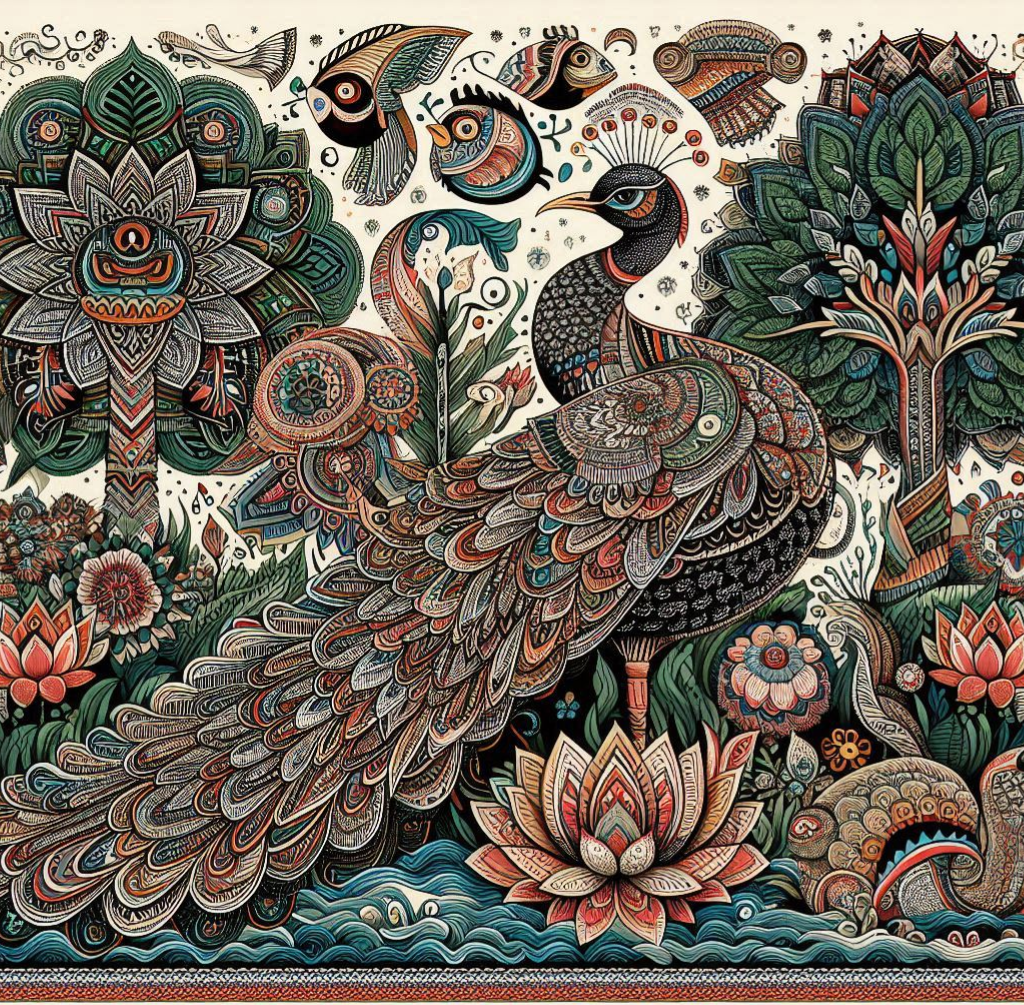
Peacock — Love, Beauty, Grace, and Celebration
The peacock is another deeply admired figure in Madhubani art.
Known for its elegance, beauty, and colorful feathers, the peacock symbolizes:
- Love and romance
- Beauty and joy
- Celebration and happiness
- Gracefulness and emotional richness
Peacocks are also closely connected with Indian mythology and devotion. Their beauty often reflects themes of divine love, emotional expression, and artistic creativity.
Many Madhubani paintings featuring peacocks feel joyful and emotionally uplifting, making them especially popular for living rooms, hallways, and artistic spaces.
In spiritual symbolism, the peacock may also remind us to celebrate life with beauty, confidence, and gratitude.
The Sun and Moon — Cosmic Balance and Continuity
The sun and moon frequently appear together in Madhubani compositions.
Rather than simply representing day and night, they symbolize the deeper rhythm of existence.
The sun often represents:
- Energy
- Strength
- Growth
- Life force
- Stability
The moon traditionally symbolizes:
- Emotional balance
- Calmness
- Reflection
- Intuition
- Peace
Together, they remind us that life moves through cycles of light and darkness, activity and stillness, joy and patience.
Their presence in Madhubani art reflects a belief in balance, continuity, and harmony.
Trees and Nature — Life, Growth, and Sacred Connection
Trees occupy an important place in Madhubani storytelling.
Many paintings include richly detailed branches filled with birds, flowers, leaves, and life.
Trees often symbolize:
- Growth and renewal
- Family roots and ancestry
- Spiritual grounding
- Fertility and continuity
- Connection between human life and nature
In traditional Indian thought, nature is not separate from spirituality—it is part of it.
This explains why Madhubani art so beautifully celebrates forests, rivers, animals, flowers, and sacred landscapes.
In modern homes, nature-inspired Madhubani art often creates a feeling of calmness, warmth, and grounded energy.
Radha–Krishna — Divine Love, Devotion, and Emotional Connection
Among the most spiritually meaningful themes in Madhubani art are depictions of Radha and Krishna.
These paintings are cherished not only for their beauty but for what they represent emotionally and spiritually.
Radha-Krishna imagery often symbolizes:
- Pure love
- Devotion and faith
- Emotional connection
- Harmony and unity
- Spiritual companionship
For many viewers, Madhubani paintings of Radha and Krishna create an atmosphere of tenderness, love, peace, and divine beauty inside a home.
Rather than merely decorative, these artworks often feel emotionally alive.
Shiva–Parvati — Balance, Strength, and Sacred Partnership
Depictions of Shiva and Parvati often represent balance within life and relationships.
Their imagery symbolizes:
- Masculine and feminine harmony
- Stability and transformation
- Protection and strength
- Devotion and sacred companionship
For couples and families, these themes often feel deeply meaningful because they reflect balance, trust, patience, and unity.
Goddess Imagery — Protection, Wisdom, Prosperity, and Inner Strength
Madhubani art frequently includes goddess figures such as:
- Lakshmi
- Durga
- Saraswati
Each represents different energies:
Lakshmi — abundance, prosperity, beauty, blessings
Durga — courage, protection, strength, resilience
Saraswati — wisdom, creativity, learning, inner refinement
Such artwork often creates a feeling of inspiration and spiritual warmth within a space.
The Meaning of Colors in Madhubani Art
Madhubani paintings are known for vibrant visual richness, but color in traditional folk art often carries emotional and symbolic meaning as well.
Red — Passion, Love, Celebration, and Vitality
Often associated with weddings, sacred rituals, and emotional warmth.
Yellow — Knowledge, Positivity, Learning, and Light
Connected to spirituality, sacredness, and wisdom.
Green — Nature, Growth, Harmony, and Renewal
Represents fertility, peace, freshness, and balance.
Blue — Calmness, Divinity, and Infinite Space
Frequently associated with divine figures and spiritual depth.
Orange — Spiritual Energy and Transformation
Represents warmth, devotion, sacred fire, and inner strength.
Black — Protection and Contrast
Traditionally used to create definition, strength, and visual balance.
When thoughtfully combined, these colors create paintings that feel emotionally alive rather than visually empty.
Perhaps this is one reason Madhubani art feels so captivating—it speaks to both the eyes and the emotions at the same time.
Why Madhubani Art Feels Spiritually Comforting in a Home
Have you ever walked into a room and immediately felt warmth, calmness, or emotional comfort?
Sometimes art quietly influences how a space feels.
Many people describe Madhubani art as emotionally comforting because it combines:
- Storytelling
- Nature symbolism
- Sacred imagery
- Repetition and rhythm
- Rich visual harmony
Unlike generic wall decor, Madhubani artwork often feels personal and meaningful.
For some homeowners, it creates cultural nostalgia.
For others, it inspires peaceful reflection or emotional grounding.
Whether placed in a living room, meditation corner, prayer space, reading area, hallway, or bedroom, Madhubani-inspired artwork often brings a feeling of beauty that goes beyond decoration.
It quietly reminds us of culture, harmony, symbolism, and the emotional richness of life.
Madhubani Art in Modern Home Decor — Tradition Meets Contemporary Living
Although Madhubani art carries centuries of tradition, one of the most beautiful things about it is how naturally it fits into modern homes.
In today’s world, people are increasingly searching for more than beautiful interiors. Many want spaces that feel calming, meaningful, warm, and emotionally uplifting.
This is one reason traditional art forms such as Madhubani are becoming popular once again.
Rather than filling homes with generic decoration, homeowners are choosing artwork that reflects identity, culture, storytelling, spirituality, and emotional connection.
Madhubani art offers all of these qualities beautifully.
Its intricate patterns, symbolic imagery, and vibrant visual storytelling create an atmosphere that feels alive and meaningful.
Whether displayed in a minimalist apartment, a modern home, a meditation room, or a traditional family space, Madhubani art often becomes a conversation piece that quietly radiates warmth and cultural richness.
Unlike trend-based decor that changes every few years, folk art rooted in history often feels timeless.
Many people describe Madhubani art as something that brings emotional personality into a room.
It tells a story.
It creates mood.
It makes spaces feel more human.
Why Younger Generations Are Rediscovering Madhubani Art
For a long time, traditional folk art was often seen as something appreciated mainly by older generations or cultural collectors.
But something interesting has changed.
Younger people today are increasingly drawn toward meaning, mindfulness, storytelling, and authenticity.
Many younger homeowners and renters want spaces that feel intentional rather than mass-produced.
This shift has made Madhubani art surprisingly relevant to modern lifestyles.
Why?
Because it offers:
Meaningful Decor Instead of Empty Decoration
Many people no longer want walls that simply “look nice.”
They want art that reflects:
- identity,
- values,
- peace,
- emotional beauty,
- spirituality,
- or cultural appreciation.
Madhubani paintings naturally offer depth and symbolism.
A Connection to Culture and Heritage
For younger generations living abroad or away from home, traditional Indian folk art can create an emotional connection to heritage and memory.
A Madhubani artwork may remind someone of festivals, grandparents, family traditions, storytelling, or cultural roots.
Even for people unfamiliar with Indian traditions, the storytelling nature of Madhubani art often feels emotionally rich and visually fascinating.
Calmness in Fast-Paced Lives
Modern life often feels overwhelming.
Screens, deadlines, constant notifications, and stress leave many people searching for slower, more grounding experiences.
Art inspired by nature, sacred symbolism, and storytelling can help create moments of visual calmness.
This explains why many meditation rooms, yoga spaces, reading corners, and peaceful home environments now include folk-inspired or spiritually meaningful artwork.
How to Choose Madhubani Artwork for Your Home
Choosing artwork is personal.
A painting should not simply match furniture—it should also create feeling.
Before choosing Madhubani art, ask yourself:
“How do I want this room to feel?”
Peaceful?
Energetic?
Spiritual?
Warm?
Creative?
Emotionally comforting?
The answer often guides the right choice.
For Peaceful Spaces
Choose:
- lotus themes
- nature-inspired compositions
- softer color balance
- spiritual imagery
- floral symbolism
These designs often feel calming and harmonious.
Perfect for:
- meditation rooms
- bedrooms
- reading spaces
- prayer corners
For Joyful and Social Spaces
Choose:
- peacocks
- village celebrations
- vibrant storytelling scenes
- Radha-Krishna themes
- colorful symbolic patterns
These create visual energy and emotional warmth.
Perfect for:
- living rooms
- dining areas
- entrances
- family gathering spaces
For Spiritual or Sacred Energy
Choose:
- Radha-Krishna artwork
- Shiva-Parvati themes
- Goddess Lakshmi imagery
- sacred floral compositions
- divine symbolism
These artworks often inspire reflection, emotional calmness, and spiritual warmth.
Perfect for:
- meditation spaces
- devotional corners
- peaceful living areas
Decorating with Madhubani Art — Room by Room Inspiration
Living Room
The living room is often where stories, laughter, family conversations, and guests gather.
A statement Madhubani artwork here can create warmth, beauty, and cultural character.
Popular themes:
- peacocks
- village life
- Krishna themes
- sacred trees
- floral storytelling scenes
A large central artwork often becomes a beautiful focal point.
Bedroom
Bedrooms benefit from calm and emotionally comforting visuals.
Choose:
- lotus symbolism
- softer compositions
- floral patterns
- romantic Radha-Krishna themes
Such artwork often creates feelings of peace, tenderness, and emotional harmony.
Meditation or Prayer Room
Sacred spaces naturally connect with Madhubani symbolism.
Themes featuring:
- Krishna,
- Shiva,
- goddess imagery,
- lotus flowers,
- sacred geometry,
- divine storytelling
can create an atmosphere of quiet reflection and inner calm.
Entryway or Hallway
An entryway quietly introduces the personality of a home.
A meaningful Madhubani artwork near an entrance can immediately create:
- warmth,
- cultural richness,
- beauty,
- visual storytelling.
It becomes a welcoming experience.
Home Office or Creative Space
Surprisingly, Madhubani art also works beautifully in creative workspaces.
Nature themes, symbolic birds, flowing lines, and storytelling imagery may inspire creativity, focus, and emotional balance.
Preserving Indian Heritage Through Art
Traditional art forms survive when people continue to appreciate, celebrate, and share them.
Madhubani art is not only visually beautiful—it carries centuries of cultural memory.
It preserves stories.
Beliefs.
Rituals.
Symbolism.
Ways of seeing life.
When traditional-inspired art enters a modern home, something meaningful happens.
Culture remains alive.
Stories continue.
Future generations remain connected to heritage.
In a rapidly changing world, preserving beauty and cultural memory becomes more important than ever.
Why Madhubani Art Is More Than Decoration
Perhaps the greatest beauty of Madhubani art lies in this simple truth:
It is more than decoration.
It carries emotion.
Meaning.
Storytelling.
Spiritual symbolism.
Connection.
Tradition.
Memory.
Whether admired for cultural beauty, spiritual warmth, emotional comfort, or artistic richness, Madhubani art invites us to slow down and notice meaning.
To many, it becomes more than wall art.
It becomes atmosphere.
A feeling.
A reminder of beauty rooted in history, devotion, storytelling, and life itself.
In a world that often feels rushed and temporary, Madhubani art quietly reminds us of something timeless:
Beauty becomes more powerful when it carries meaning.
Final Thoughts
Madhubani art continues to inspire hearts across generations because it speaks to something deeply human—a desire for beauty, meaning, connection, and emotional warmth.
Its sacred symbols, vibrant storytelling, cultural richness, and spiritual depth make it more than a traditional art form.
It becomes an experience.
Whether displayed in a peaceful meditation corner, a warm family living room, or a thoughtfully curated modern interior, Madhubani-inspired art has the power to transform spaces into something more meaningful.
For those who value art that tells stories, celebrates heritage, and inspires emotional connection, Madhubani remains one of India’s most timeless artistic treasures.