 Cart is empty
 Introduction
Among the many motifs found in traditional Madhubani paintings, the peacock holds a special place. Known for its vibrant feathers, graceful movements, and symbolic significance, the peacock has been an important element in Indian culture for centuries. In Madhubani art, peacocks are more than decorative subjects—they represent beauty, love, prosperity, spirituality, and the harmonious relationship between humans and nature.
Originating in the Mithila region of Bihar, Madhubani art is one of India’s most celebrated folk art traditions. Passed down through generations, this art form uses intricate patterns, natural colors, and symbolic imagery to tell stories, celebrate traditions, and express cultural values. The peacock is one of the most beloved motifs within this artistic tradition.
In this article, we explore the symbolism of peacocks in Madhubani art, their cultural and spiritual meanings, artistic representation, and why they continue to inspire artists and art lovers around the world.
The Peacock in Indian Culture
Before understanding its role in Madhubani art, it is important to understand why the peacock is so significant in Indian culture.
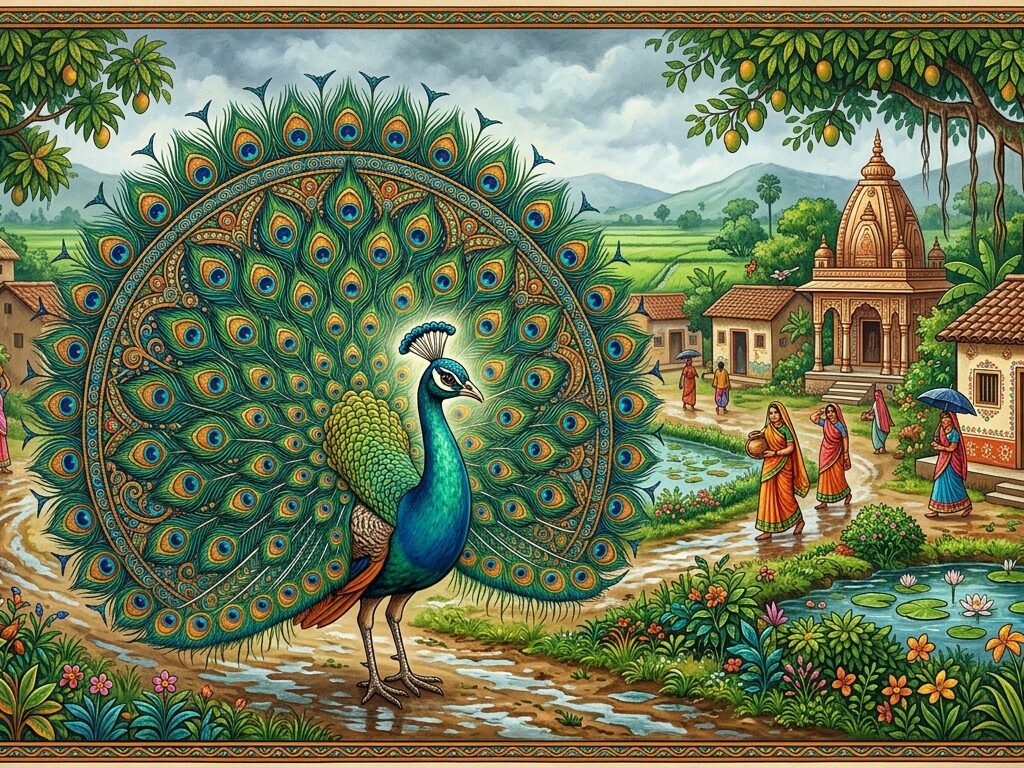
The peacock is India’s national bird and has been associated with royalty, divinity, beauty, and prosperity for thousands of years. Ancient scriptures, temple carvings, folklore, and paintings frequently feature peacocks as symbols of grace and divine protection.
Its magnificent plumage, especially during the monsoon season, has inspired poets, artists, and storytellers across generations.
Origins of Peacock Motifs in Madhubani Art
Madhubani paintings traditionally depict elements from daily life, mythology, nature, and religious ceremonies. Since the Mithila region is closely connected with agriculture and natural surroundings, artists often portray animals, birds, trees, and flowers.
The peacock naturally became a favorite subject because of its beauty and symbolic importance.
Women artists traditionally painted peacocks on:
- Wedding walls
- Festival decorations
- Household murals
- Sacred ceremonial spaces
Over time, the motif evolved into one of the most recognizable symbols in Madhubani painting.
Symbol of Beauty and Grace
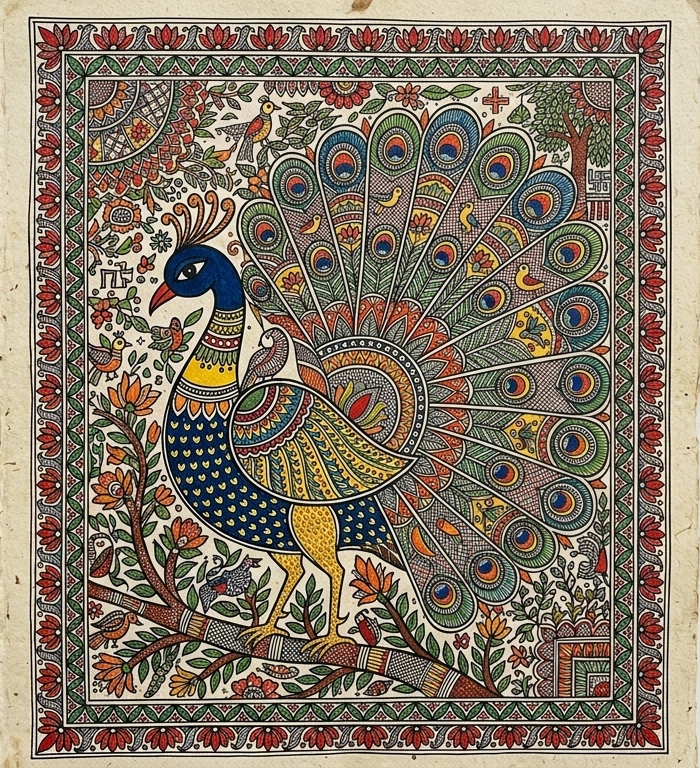
The most obvious symbolism of the peacock is beauty.
Its colorful feathers and elegant posture make it one of nature’s most visually striking creatures. Madhubani artists use intricate lines, geometric patterns, and vibrant colors to capture this beauty.
Peacock paintings often symbolize:
- Elegance
- Harmony
- Joy
- Positive energy
The detailed feathers allow artists to demonstrate their skill while creating visually captivating compositions.
Peacock as a Symbol of Love
In Indian folklore, peacocks are often associated with romance and emotional connection.
During the rainy season, peacocks perform elaborate dances to attract mates. This natural behavior became a symbol of:
- Love
- Courtship
- Marriage
- Emotional harmony
For this reason, peacocks frequently appear in Madhubani wedding paintings.
Many traditional wedding murals include pairs of peacocks facing one another, symbolizing:
- Unity between husband and wife
- Mutual affection
- Lifelong companionship
Artists often place peacock couples among flowers, vines, and sacred symbols to emphasize marital happiness.
Connection with Lord Krishna
One of the strongest spiritual associations of the peacock comes from Hindu mythology.
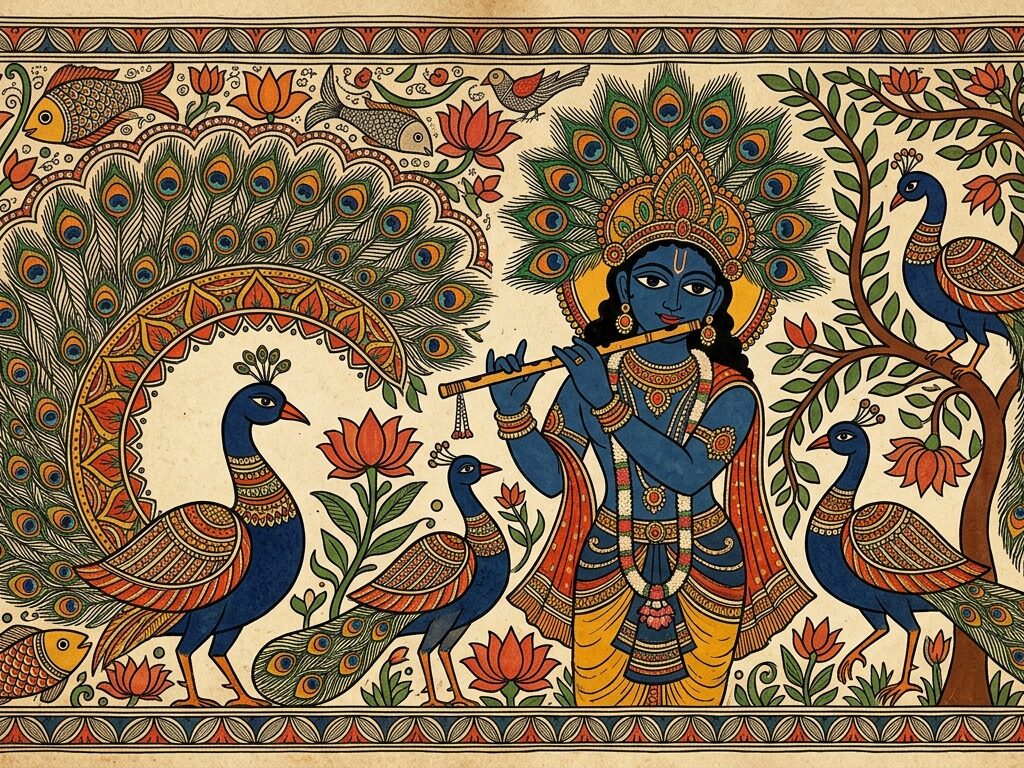
Lord Krishna is frequently depicted wearing a peacock feather in his crown. The feather symbolizes:
- Divine beauty
- Wisdom
- Compassion
- Spiritual awakening
Because Krishna occupies a central place in Indian devotional traditions, peacocks naturally gained sacred significance.
Many Madhubani artists include:
- Krishna with peacock feathers
- Peacocks surrounding Krishna
- Divine scenes featuring peacock motifs
These paintings serve both artistic and devotional purposes.
Representation of Prosperity and Good Fortune
In many parts of India, peacocks are considered symbols of prosperity.
Their vibrant appearance and association with rainfall connect them with abundance and agricultural success.
For rural communities in Mithila, rainfall meant:
- Healthy crops
- Food security
- Economic stability
Because peacocks are most active during the monsoon season, they became symbols of hope and prosperity.
Madhubani artists often include peacocks alongside:
- Trees of life
- Lotus flowers
- Fish motifs
- Fertility symbols
Together, these elements communicate wishes for abundance and happiness
The Peacock and the Monsoon Season
The arrival of the monsoon is a significant event in Indian life.
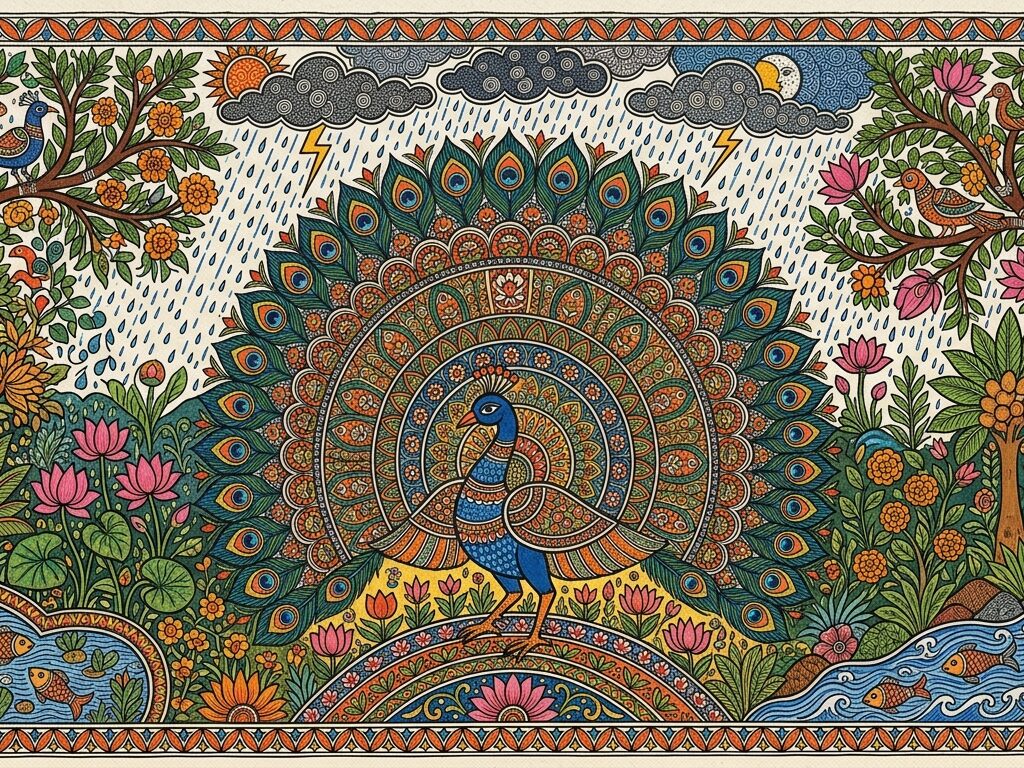
Peacocks are famous for their joyful dances before and during rainfall. This connection transformed them into symbols of:
- Renewal
- Rejuvenation
- Fertility
- Celebration
Madhubani paintings frequently capture peacocks with open feathers surrounded by rain-inspired patterns and lush vegetation.
These artworks celebrate nature’s cycles and humanity’s dependence on environmental harmony.
Spiritual Significance of the Peacock
Beyond beauty and prosperity, the peacock carries profound spiritual symbolism.
Many traditions interpret the bird as representing:
- Purity
- Transformation
- Self-realization
- Divine protection
Its ability to renew and display its magnificent feathers serves as a metaphor for spiritual growth.
In Madhubani art, peacocks often appear alongside sacred symbols such as:
- Lotus flowers
- Sun motifs
- Divine figures
- Sacred geometric forms
Together, these elements express spiritual aspirations and devotion.
Artistic Techniques Used to Paint Peacocks
One reason peacocks are so popular among Madhubani artists is that they provide opportunities for intricate artistic expression.
Artists carefully create:
- Detailed feather patterns
- Repetitive geometric designs
- Floral embellishments
- Decorative borders
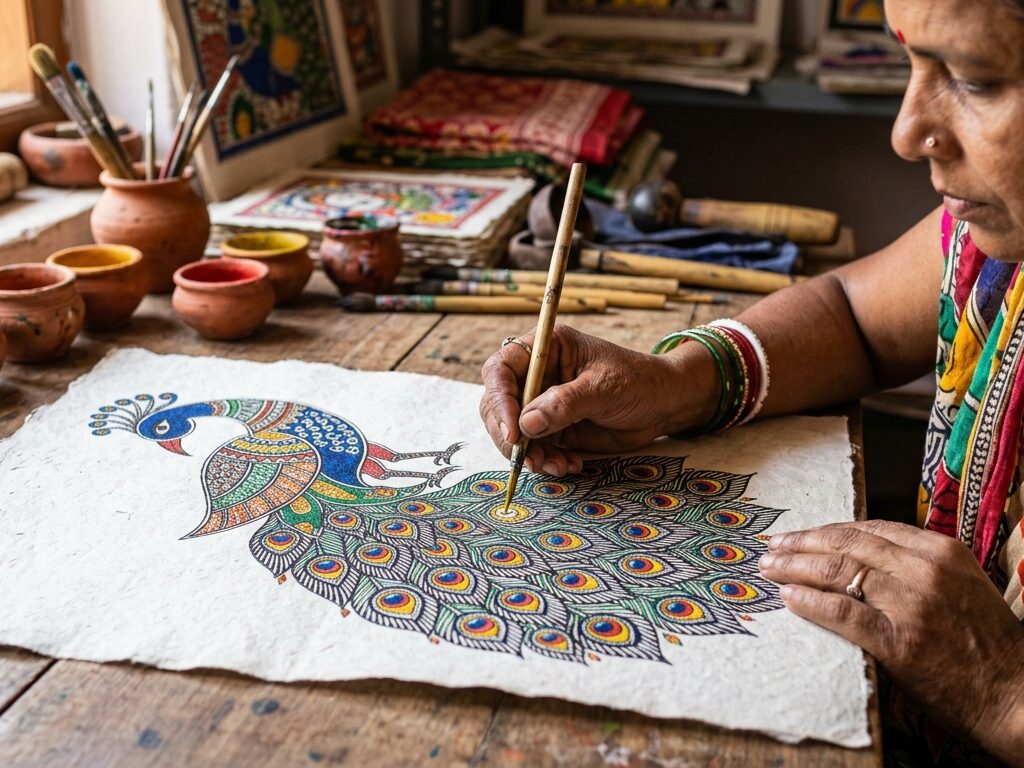
Traditional colors include:
- Blue
- Green
- Yellow
- Red
- Black
Natural pigments derived from plants, flowers, and minerals were traditionally used
Peacock Pairs in Madhubani Art
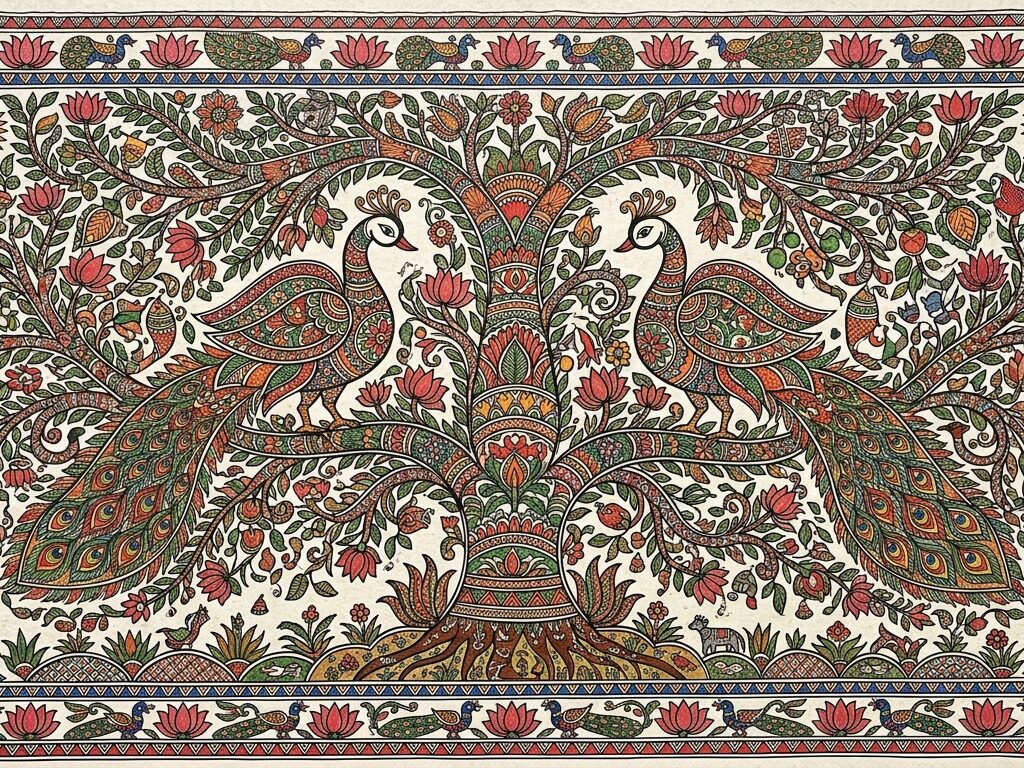
A particularly common motif is the depiction of paired peacocks.
Two peacocks facing each other symbolize:
- Balance
- Partnership
- Harmony
- Family unity
These compositions are especially popular in wedding art and decorative home paintings.
The symmetrical arrangement also reflects the visual balance that is characteristic of Madhubani art.
Peacock and the Tree of Life
One of the most iconic combinations in Madhubani art is the peacock alongside the Tree of Life.
The Tree of Life represents:
- Growth
- Continuity
- Family lineage
- Interconnectedness
When combined with peacocks, the imagery communicates:
- Prosperity
- Harmony with nature
- Generational blessings
- Spiritual abundance
These paintings are widely used as decorative wall art in homes around the world.
Why Peacocks Remain Popular in Modern Madhubani Art
Today, Madhubani art has gained international recognition.
Despite modern influences, peacocks remain one of the most requested motifs because they:
- Instantly represent Indian culture
- Appeal to global audiences
- Add vibrant visual interest
- Carry timeless symbolic meanings
Modern artists continue to experiment with colors and compositions while preserving traditional symbolism.
Peacock-themed Madhubani artworks now appear on:
- Canvas paintings
- Home décor products
- Textiles
- Greeting cards
- Wall murals
- Digital art
Decorating Homes with Peacock Madhubani Art
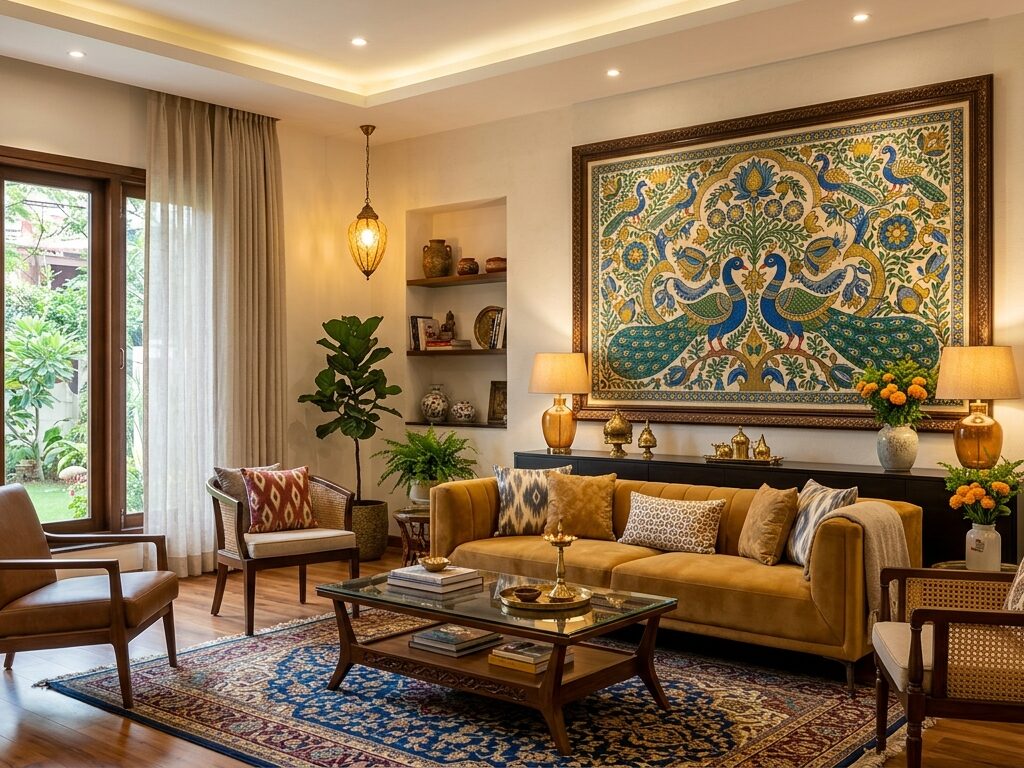
Peacock-themed Madhubani paintings are excellent choices for home decoration.
They work particularly well in:
- Living rooms
- Entryways
- Meditation spaces
- Dining rooms
- Cultural galleries
Benefits include:
- Adding vibrant color
- Celebrating Indian heritage
- Creating a positive atmosphere
- Serving as meaningful conversation pieces
Their symbolic association with prosperity and beauty makes them especially popular as gifts.
Preserving Cultural Heritage Through Peacock Motifs
Every Madhubani peacock painting represents more than artistic skill.
It preserves:
- Traditional storytelling
- Cultural memory
- Folk wisdom
- Community identity
By supporting Madhubani artists and appreciating their work, collectors help ensure that this remarkable artistic tradition continues for future generations.
The peacock motif acts as a bridge between ancient symbolism and contemporary appreciation.
Conclusion
The peacock is one of the most powerful and enduring symbols in Madhubani art. Representing beauty, love, prosperity, spirituality, and harmony with nature, it embodies many of the values that define Indian cultural heritage.
Through intricate patterns, vibrant colors, and meaningful symbolism, Madhubani artists transform the peacock into more than a decorative image. It becomes a storyteller, a spiritual symbol, and a celebration of life itself.
Whether featured in traditional wedding murals, sacred paintings, or modern home décor, the peacock continues to captivate audiences around the world. Its timeless appeal reminds us of the deep connection between art, nature, and cultural identity—a connection that remains at the heart of Madhubani art today.