
 Cart is empty
 Introduction
Every morning, before the world fully awakens, something extraordinary happens.
The darkness slowly retreats. Birds begin their songs. Flowers open their petals. Rivers sparkle with golden reflections. And from the horizon emerges the radiant light of Lord Surya, the eternal Sun God.
For thousands of years, Surya Dev has been worshipped as the visible form of divine energy. While many deities are known through temples, scriptures, and sacred stories, Surya can be seen by every person, every day. His light touches mountains, forests, oceans, villages, and cities alike, reminding humanity that divine grace shines equally upon all.
Ancient sages did not merely see the sun as a celestial object. They saw it as a symbol of wisdom, discipline, truth, and spiritual awakening. Every aspect of Surya Dev’s divine form—from his golden chariot to his seven magnificent horses—contains profound lessons for those willing to understand them.
In this journey, we will explore twelve sacred stories that reveal the deeper meaning behind Lord Surya and the timeless wisdom hidden within his celestial path across the heavens.
The Day the Sages Discovered the Source of Life
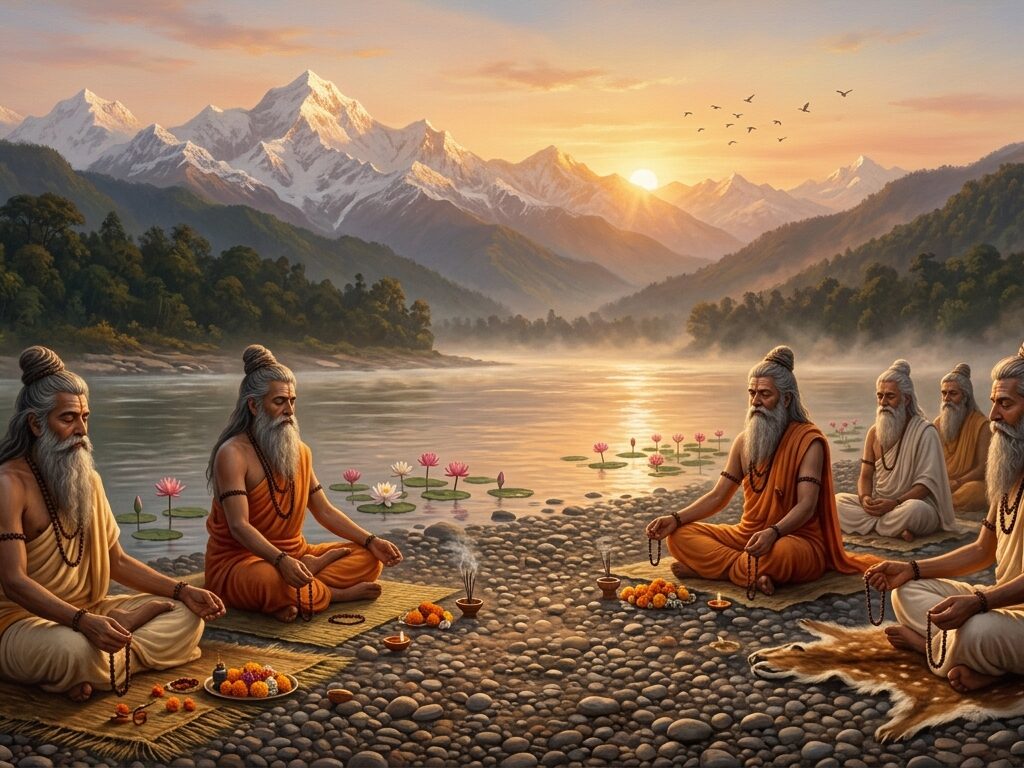
Long ago, when the forests of ancient India were untouched and rivers flowed as pure as crystal, a group of great sages gathered in the foothills of the Himalayas.
These wise men had spent many years studying the mysteries of creation. They had explored sacred scriptures, practiced deep meditation, and searched tirelessly for the answer to one question:
“What is the true source of life?”
Some believed it was water.
Others believed it was air.
A few thought it was the earth itself.
Unable to agree, they decided to undertake a great spiritual quest.
For forty days and forty nights, the sages sat beside a sacred river, meditating in silence. They observed the natural world around them. They watched animals roam through the forests. They studied the growth of plants. They observed changing seasons and the movement of the stars.
Yet the answer remained hidden.
Then, on the morning of the forty-first day, something remarkable happened.
As dawn approached, the eastern sky slowly transformed from darkness into shades of gold and crimson. The first rays of sunlight touched the mountains.
The sages noticed birds immediately awaken from their nests.
Flowers that had remained closed during the night began to bloom.
The river sparkled with renewed brilliance.
Animals emerged from their shelters.
Even the cold morning air seemed filled with fresh energy.
One elderly sage stood and pointed toward the rising sun.
“Look carefully,” he said.
The others watched in silence.
Every living thing seemed to respond to the arrival of the sun.
The trees stretched toward its light.
The rivers reflected its beauty.
The entire world appeared to come alive in its presence.
At that moment, the sages understood.
The source of life was not merely water, air, or earth.
All these elements depended upon something greater.
Without the sun, there would be no growth.
Without the sun, there would be no warmth.
Without the sun, there would be no life.
The sages bowed toward the rising orb and recognized the divine consciousness behind it.
They called this sacred power Surya Dev, the radiant giver of life.
From that day forward, Surya was revered not simply as the physical sun but as the visible manifestation of divine energy itself.
The ancient Vedic scriptures later described him as the eye of the universe, the witness to all actions, and the eternal source of vitality.
The lesson of the sages remains relevant even today.
In a world filled with distractions, we often forget the simple gifts that sustain life. Every sunrise is a reminder that existence itself is a blessing. Just as the sages discovered wisdom by observing nature, we too can find spiritual insight by appreciating the light that greets us each morning.
Lord Surya teaches us that true wisdom begins with gratitude.
The Birth of Surya Dev and the Blessing of the Gods
Long before mountains rose from the earth and rivers carved their paths across the land, the universe was filled with uncertainty.
Although the gods had created the heavens, the earth, and the oceans, darkness still lingered over creation. The world lacked a guiding light that could bring warmth, growth, and order to all living beings.
Seeing this imbalance, the great sage Kashyapa and his divine wife Aditi prayed deeply for a force that could illuminate the universe and sustain life.
Their prayers were heard.
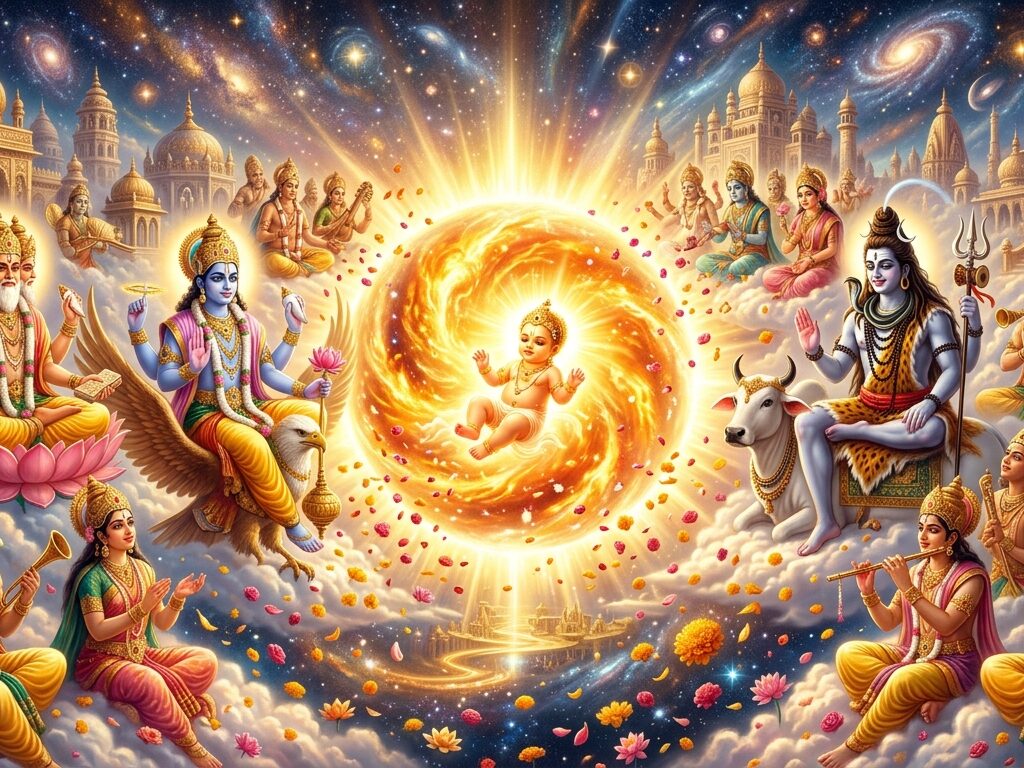
One celestial morning, the heavens began to glow with an extraordinary radiance unlike anything the gods had ever witnessed. The skies shimmered with golden light, and divine music echoed across the celestial realms.
From this magnificent brilliance emerged a divine being whose presence filled every corner of creation with warmth and life.
The gods stood in awe.
“Who is this glorious being?” they asked.
Lord Brahma smiled and replied, “This is Surya, the light that shall guide the universe.”
As Surya Dev opened his radiant eyes, darkness retreated from every direction. The heavens sparkled brighter than ever before. Rivers reflected his golden glow, and the earth awakened with new energy.
The gods showered flowers from the heavens.
The celestial musicians played sacred melodies.
Even the winds seemed to dance in celebration.
Lord Indra stepped forward and offered his blessings.
“You shall bring strength to warriors, wisdom to seekers, and prosperity to those who honor truth.”
Lord Vishnu declared, “Your light shall sustain all living beings.”
And Lord Shiva proclaimed, “You shall remind humanity that knowledge always defeats ignorance.”
Thus Surya Dev became one of the most revered among the Adityas—the divine children of Aditi.
From that day onward, every sunrise became a symbol of hope.
No matter how dark the night, Surya would always return.
No matter how difficult life’s challenges became, his light would remind humanity that every new day carries the possibility of renewal.
Even today, devotees greet the rising sun with folded hands because it represents more than physical light—it represents courage, wisdom, and the promise of a fresh beginning.
The story of Surya’s birth teaches us that light appears whenever darkness seems strongest.
Just as Surya emerged to illuminate creation, wisdom can emerge within us whenever we choose hope over fear and knowledge over ignorance.
The King Who Forgot to Thank the Sun
Many centuries after the birth of Surya Dev, there ruled a powerful king named Veerendra.
His kingdom was prosperous beyond imagination.
The fields produced abundant harvests.
Merchants filled the markets with treasures from distant lands.
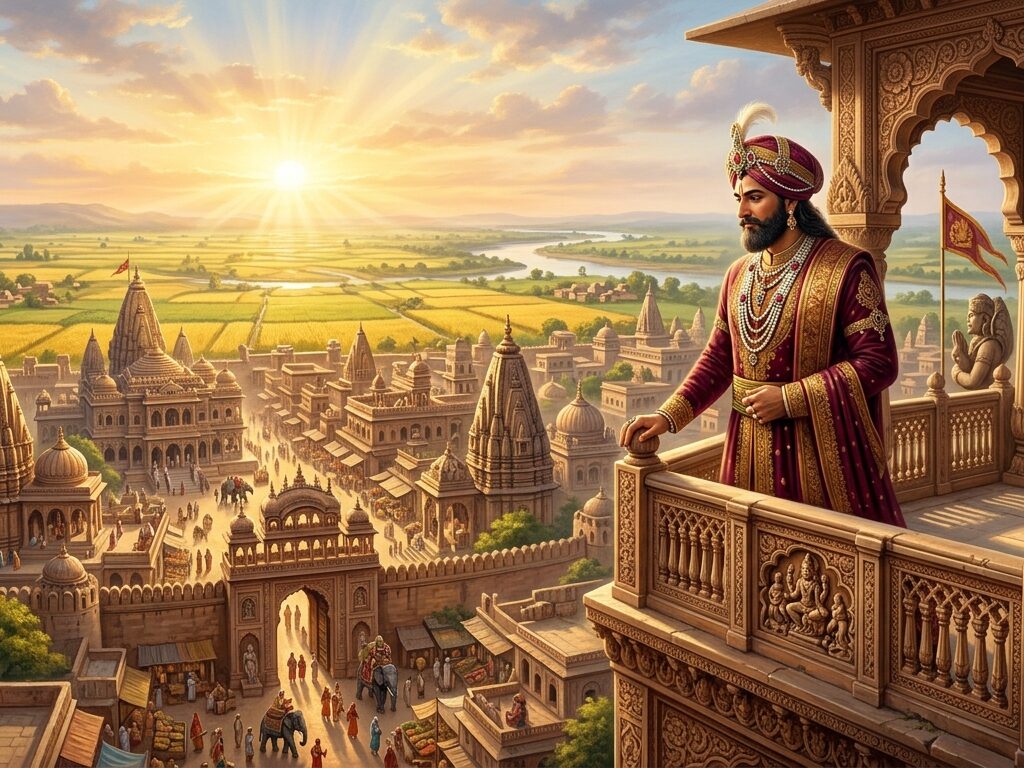
The people were healthy and content.
Each morning, before beginning his royal duties, King Veerendra would stand facing the east and offer prayers to Surya Dev.
He believed that all success came from divine blessings.
Years passed, and his kingdom continued to flourish.
Slowly, however, pride entered his heart.
One morning, the king looked upon his vast empire and thought,
“Why should I thank Surya for my success? I built this kingdom through my own strength and wisdom.”
That day, he skipped his morning prayers.
The next day, he skipped them again.
Weeks became months.
Soon, the king completely abandoned his gratitude toward the Sun God.
At first, nothing seemed different.
But slowly, changes began to appear.
The harvests became weaker.
Disputes arose among his ministers.
Trade declined.
The king himself felt restless and troubled.
Despite his wealth, he could no longer find peace.
Confused, Veerendra summoned an elderly sage who lived deep within the forest.
After listening to the king’s troubles, the sage smiled gently.
“My king, have you forgotten the source of your blessings?”
Veerendra frowned.
“I have worked hard for everything I possess.”
The sage pointed toward the setting sun.
“Indeed, you worked hard. But tell me, could your crops grow without sunlight? Could your people thrive without warmth? Could life exist without the energy that sustains it?”
The king fell silent.
For the first time, he realized how much he had taken for granted.
The next morning, before dawn, Veerendra walked alone to the riverbank.
As Surya rose above the horizon, he folded his hands and offered a heartfelt prayer.
“Forgive my arrogance. Teach me gratitude once again.”
From that day forward, the king resumed his daily worship.
Although challenges did not disappear overnight, peace gradually returned to his heart.
His kingdom prospered once more, but this time he understood a valuable truth:
Success is greatest when accompanied by gratitude.
The story reminds us that blessings often become invisible when they are constant.
Like the king, we may forget the countless gifts that support our lives each day.
Surya Dev teaches us that gratitude transforms ordinary moments into sacred ones.
The Curious Disciple and the Seven Horses
High in the mountains, where the air was pure and the forests whispered ancient secrets, there lived a wise guru known for his deep understanding of the Vedas.
Students traveled from distant kingdoms to learn from him.
Among them was a young disciple named Anand.
Unlike the others, Anand was never satisfied with simple answers. He questioned everything he saw and constantly sought deeper meaning.
One morning, as the guru and his students watched the sunrise, Anand noticed a beautiful painting hanging inside the ashram.
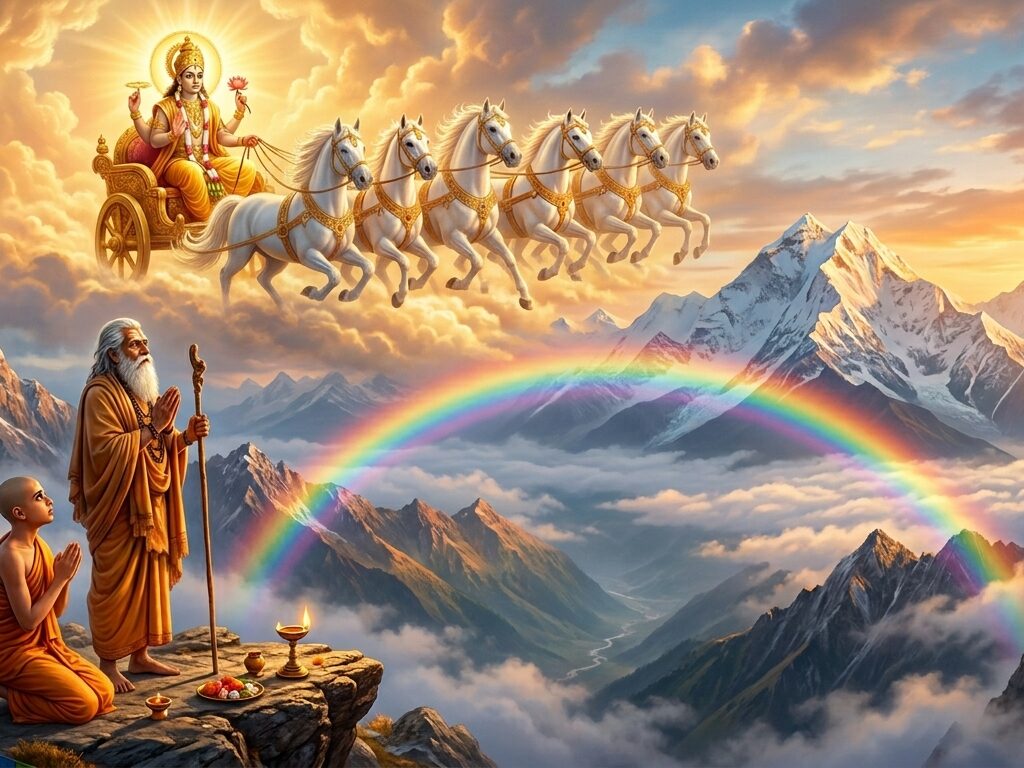
The painting showed Lord Surya riding a magnificent golden chariot pulled by seven powerful horses.
Unable to contain his curiosity, Anand approached his guru.
“Master,” he asked, “if Surya Dev is the ruler of the heavens, why does he ride behind seven horses? Why not one mighty horse or a thousand?”
The guru smiled.
He knew the boy was ready for a deeper lesson.
“Come with me,” he said.
Together they climbed a nearby hill overlooking a valley.
The morning sun was rising, and a light rain had just fallen.
As sunlight passed through the raindrops, a brilliant rainbow appeared across the sky.
The guru pointed toward it.
“What do you see?”
“A rainbow,” Anand replied.
“And how many colors?”
“Seven.”
The guru nodded.
“What appears to be one ray of sunlight is actually seven colors united together.”
Anand listened carefully.
“The seven horses remind us that all power comes from harmony. Just as sunlight contains seven colors, life itself contains many forces working together.”
The guru continued.
“The seven horses represent the seven colors of light, the seven days of the week, the seven sacred chakras within the human body, and the seven stages of spiritual growth.”
Anand looked at the rainbow with new understanding.
“The horses are not separate powers,” he said softly.
“They are one power moving together.”
The guru smiled.
“Exactly.”
He explained that if even one horse stopped running, the chariot would lose balance.
Likewise, if a person neglects one aspect of life—health, wisdom, discipline, compassion, faith, purpose, or self-awareness—harmony is lost.
The seven horses teach us that true success comes not from strength alone but from balance.
Years later, Anand became a respected teacher himself.
Whenever his students asked about Surya’s seven horses, he would tell them the story of the rainbow and the lesson he learned on that mountain.
Because the greatest wisdom often hides within the simplest symbols.
Even today, Surya Dev’s seven horses remind us that every part of our lives must move together toward a higher purpose.
When our thoughts, actions, and intentions work in harmony, we become capable of extraordinary things.
Just as seven horses pull Surya’s chariot across the heavens, balance and unity carry us forward on our spiritual journey.
The Secret of the Golden Chariot
In an ancient kingdom surrounded by deserts and mountains, there lived a young prince named Aryan.
He was intelligent, brave, and destined to become king.
Yet there was one thing that troubled him greatly.
The prince feared change.
He wanted everything to remain exactly as it was.
He wished his youth would never fade.
He wished his loved ones would never grow old.
He wished happy moments could last forever.
One day, burdened by these thoughts, he sought advice from a wandering sage.
The sage listened patiently and then invited the prince on a journey.
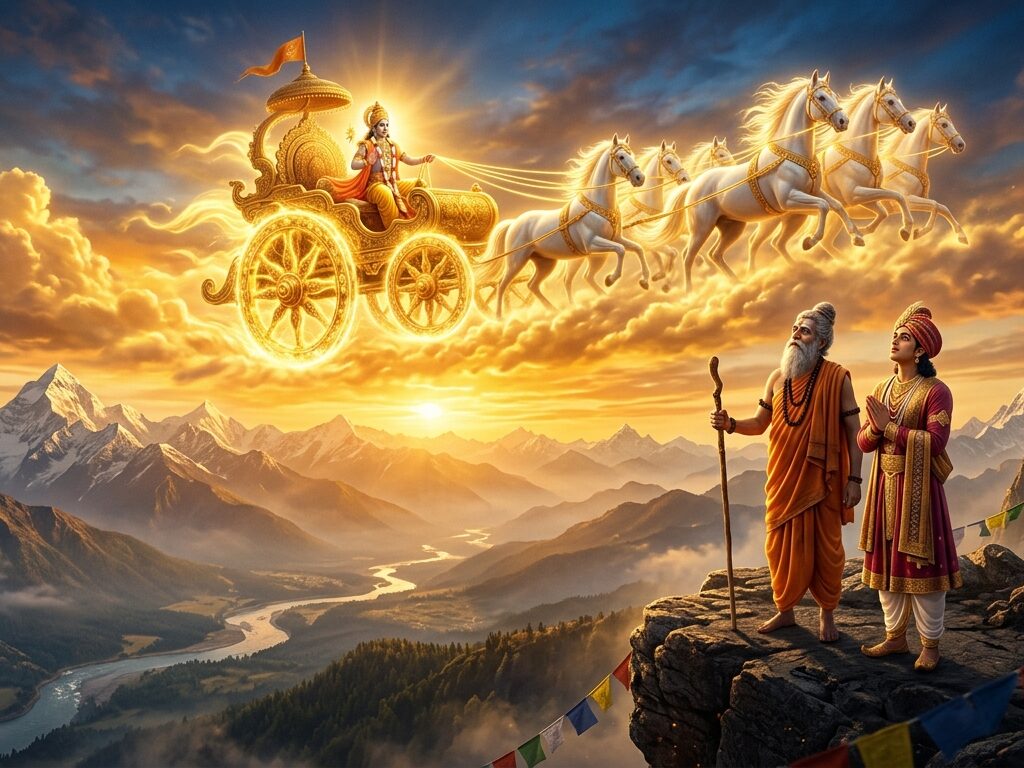
For three days they traveled across forests, rivers, and mountains until they reached a sacred cliff overlooking the horizon.
“Tomorrow morning,” the sage said, “you will find your answer.”
Before dawn, the prince awoke.
Together they sat facing the east.
As darkness slowly gave way to light, Surya Dev appeared riding his magnificent golden chariot across the heavens.
The sight was breathtaking.
The wheels shone like molten gold.
The seven horses raced forward with unstoppable determination.
The prince watched in silence.
“Do you notice something?” asked the sage.
“The chariot never stops,” Aryan replied.
The sage nodded.
“That is the secret.”
The prince looked confused.
“The chariot represents time itself.”
The sage pointed toward the sky.
“Every sunrise moves forward. Every sunset moves forward. The seasons move forward. Rivers flow forward. Life moves forward.”
The prince watched the chariot continue its celestial journey.
“Can anyone stop it?” he asked.
“No.”
“Can anyone slow it?”
“No.”
The sage smiled gently.
“And that is why Surya rides a moving chariot.”
The prince slowly began to understand.
Trying to stop change was like trying to stop the sun.
It was impossible.
Instead of fearing change, he needed to learn how to move with it.
The golden chariot teaches humanity one of life’s greatest lessons:
Nothing remains the same forever.
Challenges pass.
Pain passes.
Success passes.
Even the darkest night eventually gives way to dawn.
Years later, when Aryan became king, he ruled with wisdom and courage.
Whenever difficult times arrived, he remembered Surya’s chariot.
He knew that no matter how hard the journey seemed, life would continue moving forward.
And so would he.
The golden chariot reminds us that growth requires movement.
The future belongs to those who embrace change rather than resist it.
Just as Surya continues his eternal journey across the heavens, we too must continue moving toward greater wisdom, strength, and purpose.
Aruna – The Guardian of Dawn
Before the first rays of sunlight touch the earth, before birds begin their morning songs, and before flowers open their petals to greet the day, there is another divine being whose story is often forgotten.
His name is Aruna.
Though Surya Dev receives the glory of the sunrise, Aruna is the one who prepares the world for its arrival.
Long ago, according to ancient legends, the heavens faced a unique challenge.
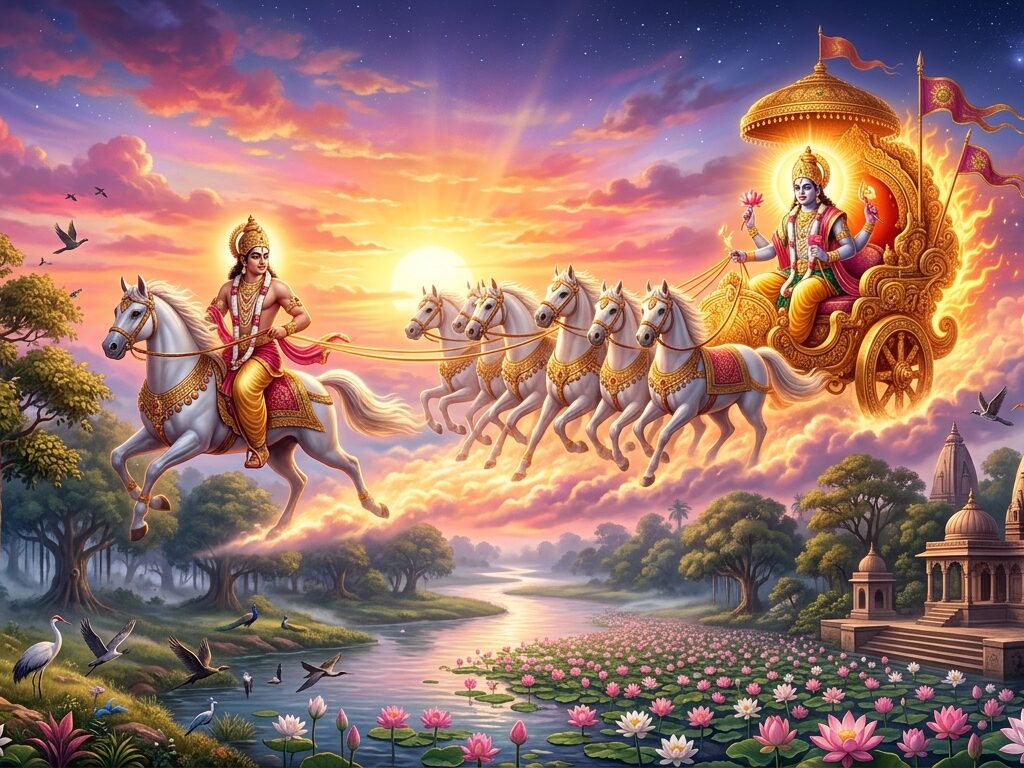
Each morning, Surya’s brilliance was so powerful that if he appeared suddenly, the earth would struggle to bear the intensity of his light.
The gods gathered and searched for a solution.
Who could gently announce the coming of the Sun God?
Who could bridge the darkness of night and the brilliance of day?
Their answer was Aruna.
Born with a radiant glow of his own, Aruna possessed neither the blazing power of the sun nor the darkness of the night.
Instead, he carried the soft golden-red light of dawn.
The gods appointed him as the charioteer of Surya Dev.
Every morning, before Surya’s arrival, Aruna would ride ahead of the celestial chariot.
As he crossed the skies, the darkness would slowly begin to retreat.
The stars would fade.
The winds would become gentler.
Birds would awaken in their nests.
Flowers would prepare to bloom.
The entire world would quietly ready itself for the arrival of divine light.
One morning, a young boy living in a village noticed the beautiful colors spreading across the sky before sunrise.
Pink.
Orange.
Gold.
Crimson.
Curious, he asked his grandfather,
“Why does the sky change colors before the sun appears?”
The old man smiled and pointed eastward.
“Those colors are the footprints of Aruna.”
The boy listened in wonder.
The grandfather continued,
“Before every great light comes preparation. Before every success comes effort. Before every harvest comes planting. And before Surya arrives, Aruna prepares the world.”
The lesson stayed with the boy throughout his life.
Whenever he faced a challenge, he remembered Aruna.
He learned not to rush important things.
He learned that patience and preparation often determine success.
Years later, he became a respected teacher and passed the same wisdom to his students.
The story of Aruna teaches us a lesson that modern life often forgets.
People admire success but rarely see the preparation behind it.
They celebrate achievements but overlook the years of effort that made them possible.
Aruna reminds us that every sunrise begins long before the sun appears.
Likewise, every dream begins with preparation, discipline, and faith.
Just as dawn quietly prepares the world for daylight, our daily efforts prepare us for future success.
In this way, Aruna is not merely the charioteer of Surya.
He is the symbol of preparation, patience, and hope.
The Warrior Who Received Surya’s Blessing
Among all the heroes of ancient India, few stories are as inspiring as that of Karna, the great warrior blessed by Surya Dev himself.
Long before the Kurukshetra war, a young princess named Kunti received a sacred mantra from a powerful sage.
The mantra carried an extraordinary blessing.
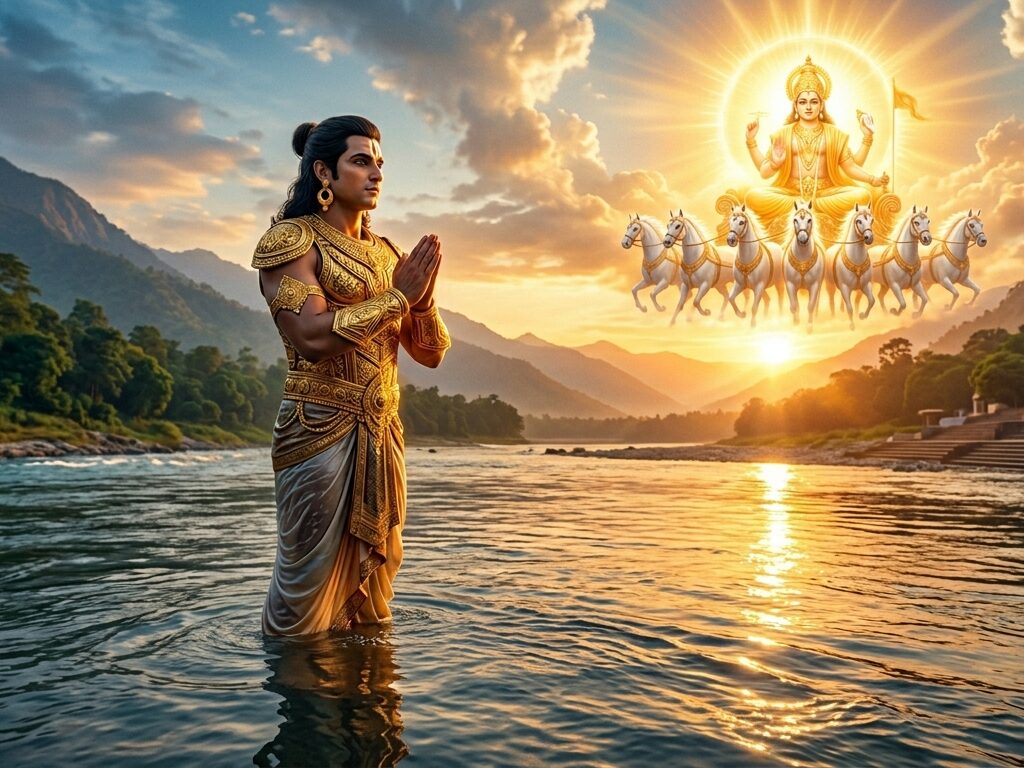
It allowed her to invoke any deity and receive their divine presence.
Curious about its power, Kunti recited the mantra while thinking of Surya Dev.
Instantly, the sky filled with golden radiance.
A brilliant light descended from the heavens.
Before her stood Lord Surya, shining like a thousand suns.
His presence was majestic yet compassionate.
From this divine encounter was born Karna, a child destined for greatness.
Surya blessed the newborn with an extraordinary gift.
Karna was born wearing a divine golden armor and celestial earrings known as the Kavacha and Kundala.
These sacred protections made him nearly invincible.
Yet Karna’s greatest strength was not his armor.
It was his character.
As he grew older, he faced rejection, hardship, and humiliation.
Despite possessing the heart of a warrior, society judged him by his birth rather than his abilities.
Many people would have become bitter.
Karna chose another path.
Every morning, he stood facing the rising sun and offered prayers to Surya Dev.
He asked not for wealth or power.
He asked for strength, wisdom, and courage.
Years passed.
His devotion never wavered.
One day, an elderly man approached Karna during his morning prayers.
The stranger requested Karna’s divine armor as a gift.
Without hesitation, Karna agreed.
He removed the very armor that protected his life and gave it away.
The old man was actually Indra in disguise.
Even the gods were astonished by Karna’s generosity.
When Surya learned what had happened, he was deeply pleased.
For Karna had proven that true greatness comes not from protection or power but from selflessness and honor.
Although Karna faced many struggles throughout his life, his name became immortal because of his courage and integrity.
To this day, he remains one of the most respected heroes in Hindu tradition.
His story teaches that Surya’s greatest blessing is not physical strength.
It is the inner strength to remain noble even when life is unfair.
Like Karna, we all face challenges.
But through discipline, integrity, and perseverance, we can discover the warrior that exists within ourselves.
How the Ancient Yogis Learned Surya Namaskar
Thousands of years ago, high in the snow-covered Himalayas, a group of yogis lived in peaceful isolation.
Far away from kingdoms and cities, they dedicated their lives to understanding the connection between the human body, mind, and spirit.
Among them was a young yogi named Rishi Anand.
Although he practiced meditation daily, he often felt that something was missing.
He could calm his mind, but he struggled to maintain the same peace throughout the day.
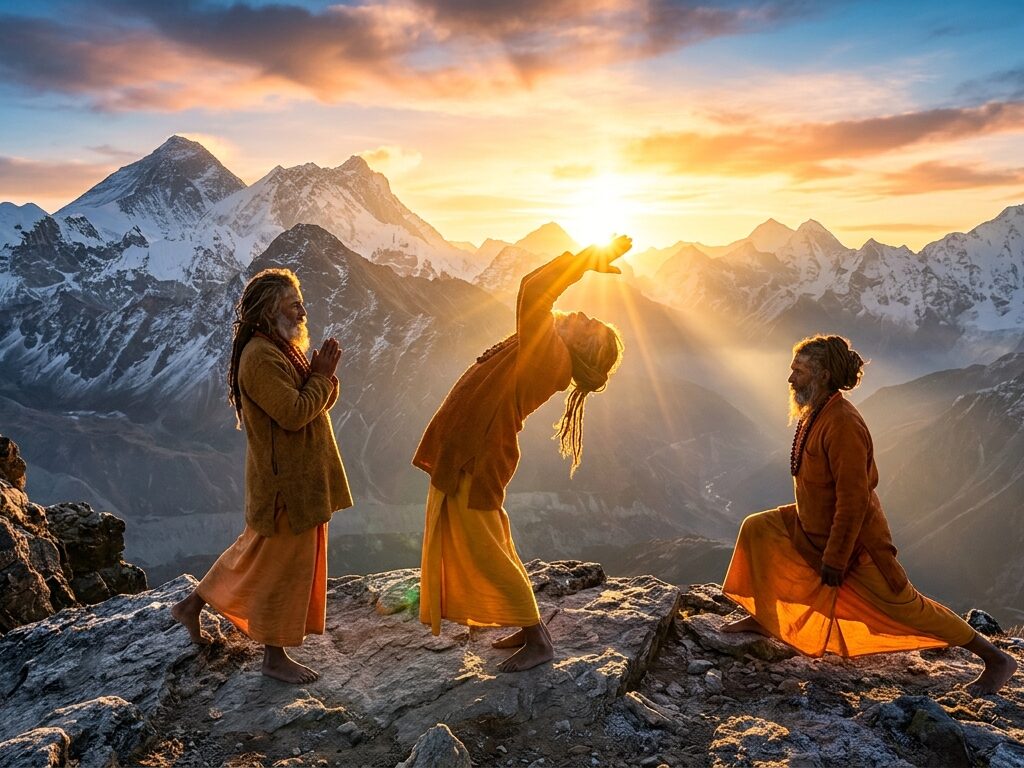
One winter morning, while meditating on a mountain peak, he noticed something remarkable.
As the first rays of sunlight touched the earth, the entire world seemed to awaken.
Birds stretched their wings.
Flowers opened toward the sky.
Animals emerged from their shelters.
Even the cold mountain air felt alive with energy.
Day after day, he observed the same miracle.
Everything in nature seemed to greet the sun with movement.
Only humans remained still.
This observation sparked a question within him.
“If all creation welcomes the rising sun, should we not do the same?”
That evening, he shared his thoughts with the elder yogis.
Together they began studying the movements of nature.
They watched trees sway with the wind.
They observed animals stretching after sleep.
They noticed how rivers flowed effortlessly toward their destination.
Inspired by these observations, the yogis created a sequence of movements designed to honor Surya Dev and absorb the energy of the new day.
Each posture carried a deeper meaning.
Some represented humility.
Others symbolized strength.
Some expressed gratitude.
Others reflected surrender to divine wisdom.
As they practiced these movements facing the rising sun, they noticed extraordinary changes.
Their bodies became stronger.
Their breathing became deeper.
Their minds became calmer.
Most importantly, they felt more connected to the rhythm of nature.
This sacred practice became known as Surya Namaskar, or “Salutation to the Sun.”
Over the centuries, it spread throughout India and eventually across the world.
Today, millions of people practice Surya Namaskar each morning.
Some see it as exercise.
Others view it as meditation.
Many consider it a spiritual offering to the Sun God.
Yet its true purpose remains unchanged.
It reminds us that each sunrise is a gift.
Each new day is an opportunity to grow stronger, wiser, and more grateful.
The ancient yogis understood that Surya’s light nourishes not only the earth but also the human spirit.
By greeting the sun with awareness and gratitude, they discovered a path toward harmony between body, mind, and soul.
Their wisdom continues to inspire people thousands of years later.
Just as the sun rises faithfully every morning, Surya Namaskar teaches us to begin each day with purpose and positivity.
The Poor Farmer and the Miracle of Makar Sankranti
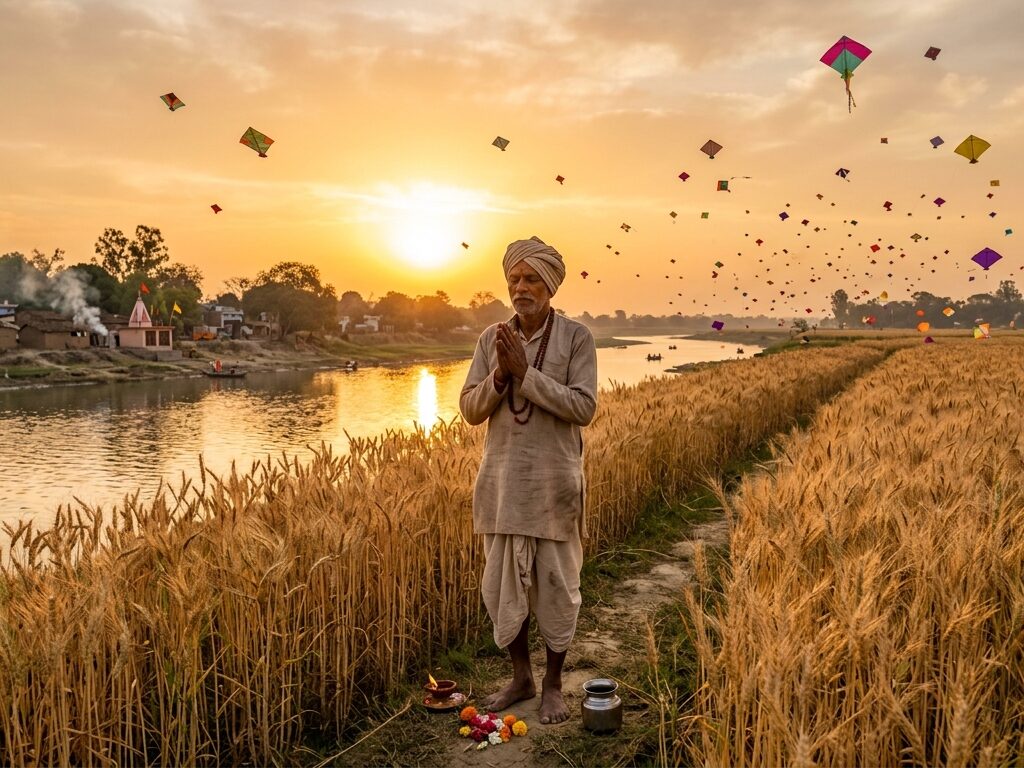
In a small village surrounded by golden fields lived a farmer named Gopal.
Unlike many others in the village, Gopal possessed very little wealth.
His house was simple.
His clothes were worn.
And year after year, his harvest barely produced enough food for his family.
Despite these hardships, Gopal never complained.
Every morning he would stand in his field, fold his hands toward the rising sun, and thank Surya Dev for another day of life.
One winter, however, disaster struck.
The rains arrived too late.
The crops grew weak.
Many farmers feared they would lose everything.
As the festival of Makar Sankranti approached, the villagers became worried.
Some questioned whether there was any reason to celebrate.
But Gopal believed differently.
“The sun still rises,” he told his family.
“As long as Surya shines upon us, there is hope.”
On the morning of Makar Sankranti, he woke before dawn.
After bathing in the river, he offered water to the rising sun and prayed with sincere devotion.
He did not ask for wealth.
He did not ask for miracles.
He simply thanked Surya Dev for the blessings he already had.
His health.
His family.
His faith.
As the weeks passed, something unexpected happened.
The weather improved.
The remaining crops grew stronger.
While the harvest was not the largest the village had ever seen, it was enough to sustain his family through the year.
More importantly, Gopal realized something profound.
The true miracle was not the harvest.
It was the ability to remain hopeful when circumstances seemed hopeless.
Many villagers who had spent months worrying found themselves exhausted and discouraged.
Gopal, however, remained peaceful because gratitude had protected his spirit.
His faith inspired others.
Soon the entire village began celebrating Makar Sankranti with renewed devotion.
They learned that the festival was not merely about the changing position of the sun.
It was about embracing new beginnings.
Just as Surya begins a new journey in the sky, human beings can begin a new chapter in their lives.
Makar Sankranti reminds us that no winter lasts forever.
Every season changes.
Every challenge passes.
And every sunrise carries the promise of fresh opportunities.
The story of Gopal teaches that true prosperity begins with gratitude.
When we appreciate what we have, we create space for even greater blessings to enter our lives.
The Child Who Offered Water to the Rising Sun
In a peaceful village beside a sacred river lived a young boy named Mohan.
He was not a prince.

He was not a sage.
He possessed no special powers or extraordinary talents.
Yet his simple devotion would teach an important lesson to everyone around him.
Every morning before sunrise, Mohan accompanied his grandfather to the riverbank.
The old man carried a small copper vessel filled with water.
As the first rays of sunlight appeared above the horizon, he would slowly pour the water toward the rising sun while chanting sacred prayers.
For many years, Mohan watched this ritual without understanding its purpose.
One morning he finally asked,
“Grandfather, why do you offer water to Surya Dev every day?”
The old man smiled.
“Because gratitude must be practiced daily.”
Mohan looked confused.
“But Surya already has oceans and rivers. Why would he need our water?”
His grandfather laughed softly.
“The water is not for Surya.”
“Then who is it for?”
“It is for us.”
The old man explained that the ritual teaches patience, discipline, and humility.
“Every morning when we offer water, we remember that life itself is a gift. We remember that every day is a new opportunity.”
Inspired by these words, Mohan decided to perform the ritual himself.
The next morning, he woke before dawn.
Sleepy and tired, he walked to the river with his small copper vessel.
He offered water to the rising sun.
Then he repeated the ritual the next day.
And the next.
Weeks became months.
Months became years.
At first, Mohan noticed no difference.
But slowly, changes began to appear.
He became more disciplined.
He learned to wake up early.
He became more patient with others.
His mind became calmer.
His teachers noticed that he focused better in school.
His parents noticed that he complained less and appreciated more.
One day, a traveler passing through the village observed Mohan’s daily ritual and asked,
“What blessing did Surya Dev give you for all these years of devotion?”
Mohan thought carefully before answering.
“He taught me how to become a better person.”
The traveler smiled.
For he understood that the greatest blessings are often invisible.
They appear not as wealth or fame but as wisdom, character, and inner peace.
The story of Mohan reminds us that transformation rarely happens overnight.
Great change often begins with small daily habits.
Just as a river is formed by countless drops of water, a strong character is built through countless small actions.
Surya Dev teaches that consistency is more powerful than occasional effort.
A few minutes of gratitude each day can slowly transform an entire life.
Why People Place Surya Artwork in Their Homes
In a modern city far from ancient temples and sacred forests, there lived a family struggling with constant stress.
Raj worked long hours.
His wife Meera felt overwhelmed by daily responsibilities.

Their children spent most of their time staring at screens.
Although they lived comfortably, their home felt strangely lacking.
There was little peace.
Little connection.
Little joy.
One weekend, the family visited an art exhibition showcasing traditional Hindu artwork.
Among the many paintings, one piece immediately captured their attention.
It depicted Lord Surya riding his golden chariot across the heavens.
The artwork radiated warmth, strength, and positivity.
Meera felt an immediate connection.
“We should place this in our home,” she said.
A few days later, the painting was hung in their living room where the morning sunlight touched it each day.
Something interesting began to happen.
Every morning, the family paused for a few moments to admire the artwork.
The children became curious about the story behind Surya Dev.
Raj began waking earlier.
Meera started spending a few quiet minutes each morning in reflection.
The painting itself did not perform miracles.
But it served as a daily reminder.
A reminder to begin each day positively.
A reminder to stay disciplined.
A reminder to appreciate life’s blessings.
Over time, their home felt different.
Warmer.
Calmer.
More connected.
Visitors often commented on the beautiful artwork and asked about its meaning.
Each conversation became an opportunity to share the wisdom of Surya Dev.
This is why sacred artwork has remained important throughout history.
Art is more than decoration.
It influences our thoughts, emotions, and environment.
A meaningful image can inspire us every day without speaking a single word.
For many people, Surya artwork symbolizes:
- Positive energy
- Confidence
- Discipline
- Success
- Spiritual growth
- New beginnings
Whether placed in a living room, office, meditation space, or prayer room, it serves as a visual reminder that light always overcomes darkness.
Just as Surya illuminates the world, sacred art can illuminate our minds and hearts.
The Eternal Journey of Light
High upon a mountain overlooking a vast valley lived an elderly sage named Vedananda.
For decades, he had studied the scriptures and taught spiritual wisdom to countless students.
Now, sensing that his time on earth was nearing its end, he gathered his disciples for one final lesson.
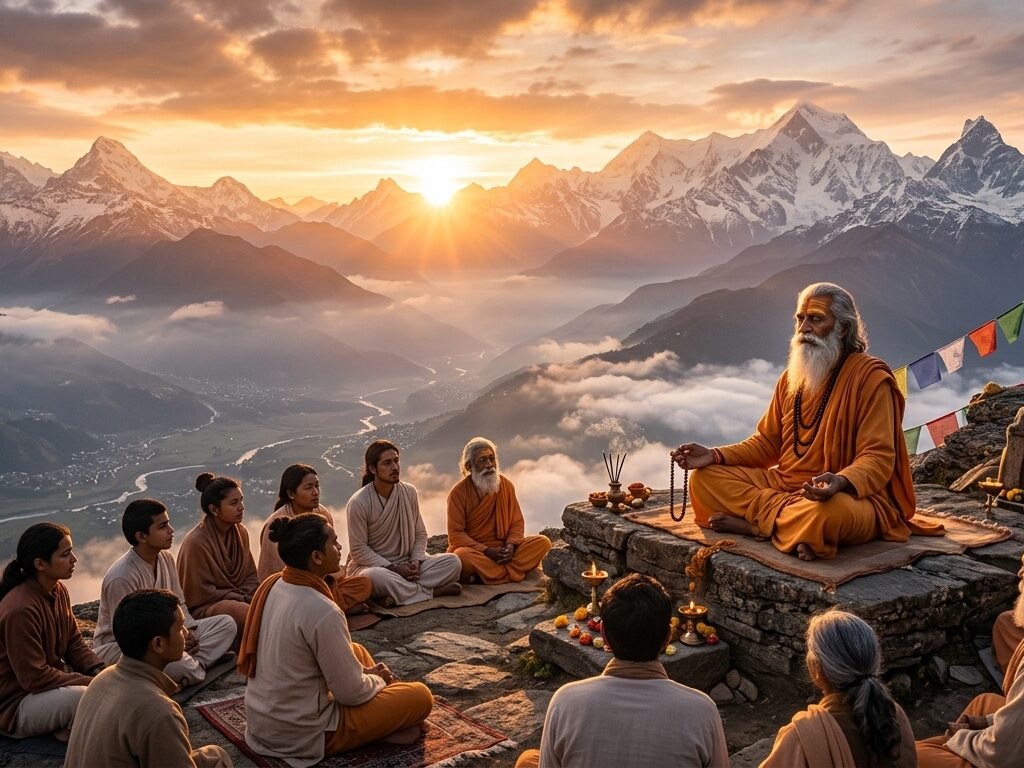
Before dawn, they climbed to the summit of the mountain.
The sky was still dark.
Stars sparkled overhead.
The students sat quietly around their teacher.
As the first light appeared on the horizon, the sage pointed toward the east.
“Tell me,” he asked, “what do you see?”
“A sunrise,” replied one student.
The sage smiled.
“Look deeper.”
Slowly, the golden light spread across the sky.
Darkness retreated from the valleys below.
Birds began to sing.
The world awakened once again.
Then the sage spoke.
“Every day, Surya teaches the same lesson.”
The students listened carefully.
“No matter how long the night lasts, the sun always returns.”
He paused.
“No matter how difficult life becomes, light always finds a way back.”
One student asked,
“Master, is that why Surya travels endlessly across the heavens?”
The sage nodded.
“Yes. His journey is the journey of every soul.”
“There will be moments of joy and moments of sorrow.”
“There will be victories and failures.”
“There will be dawns and sunsets.”
“But the journey never truly ends.”
The students watched the sun rise higher into the sky.
The sage continued.
“The greatest mistake people make is believing that darkness is permanent.”
He pointed toward the horizon.
“Yet every sunrise proves otherwise.”
The disciples sat in silence as his words settled into their hearts.
Years later, after the sage had left the world, they continued sharing his final lesson with others.
And generation after generation, the wisdom endured.
Today, whenever we watch a sunrise, we witness the same truth.
Surya Dev’s eternal journey reminds us to remain hopeful, resilient, and faithful.
Every challenge eventually passes.
Every storm eventually clears.
Every night eventually ends.
And every soul carries within it the same divine light that Surya spreads across the world.
That is why Lord Surya has been worshipped for thousands of years.
Not merely because he illuminates the earth.
But because he illuminates the human spirit.
Conclusion
The story of Lord Surya is far more than the story of the Sun God. It is a collection of timeless lessons about gratitude, discipline, courage, preparation, balance, faith, and hope.
From the sages who discovered the source of life to the old teacher who explained the eternal journey of light, each story reveals a different aspect of Surya’s wisdom.
His seven horses remind us of harmony.
His golden chariot teaches us to embrace change.
Aruna shows us the value of preparation.
Karna demonstrates courage and integrity.
The ancient yogis reveal the connection between body and spirit.
And every sunrise reminds us that light always returns.
Even today, as Surya rises over cities, villages, mountains, and oceans, his message remains unchanged:
Walk toward the light. Remain grateful. Keep moving forward. And never lose hope, for every dawn brings a new beginning.